-
Merit Badges
- Legend to identify Merit Badges
- 1910 British Merit Badges
- Square 1911 - 33
- Wide Crimped 1934 & 35
-
Narrow Tan Crimped 1936 - 42
- Tan Heavyweight Cloth with Silk Embroidery and Printed Back 1936 - 37
- Tan Heavyweight Cloth with Silk Embroidery and Plain Back 1937 - 38
- Tan Lightweight Cloth with Silk Embroidery and Plain Back 1938 - 39
- Tan Lightweight Cloth with Cotton Continuous Loop Embroidery and Plain Back 1939 - 42
- Tan Lightweight Cloth with Cotton Lockstitch Embroidery and Plain Back 1939 - 42
- Blue Background 1942 - 46
- Wartime 1942 - 46
- Khaki Narrow Crimped 1946 - 59
- Green Twill Gauze Back 1960 - 68
- Fully Embroidered Merrowed Edge 1960 - 72
- Unprinted Plastic Back 1972 - 01
- Printed Plastic Back 2002 - Current
-
Merit Badge Paper
- Merit Badge Applications
- Merit Badge Cards
-
Merit Badge Pamphlets
- Type 1 White Cover - Rectangle Drawing On Cover
- Type 2 White Cover 5-375" x 8" Title at Top
- Type 3A Tan Cover - 200 Fifth Avenue
- Type 3B Tan Cover - 2 line address New York City
- Type 3C Tan Cover - 2 line address New York N.Y.
- Type 3D Tan Cover - 1 line address New York N.Y.
- Type 4 Standing Scout Cover
- Type 5A War Cover
- Type 5B Red and White
- Type 6 Photo-Red Cover
- Type 7 Full Photo Cover or Bulls-eye Cover
- Type 8 Full Photo - Green Stripe Cover
- Type 9 Full Photo - Red Stripe Cover
- Type 10A Blue Stripe - Logo above bottom blue stripe - FDL centered
- Type 10B - Blue Stripe in bottom of photo area. FDL to left of text
- Special Covers
- Boy Craft Helps
- Merit Badge Counselor's Guides
-
Youth Position
- Junior Assistant Scoutmaster
- Senior Patrol Leader
- Assistant Senior Patrol Leader
- Patrol Leader
- Assistant Patrol Leader
- Troop Guide
- Scribe
- Quartermaster
- Instructor
- Chaplain Aide
- Den Chief
- Librarian
- Musician
- Webmaster
- Bugler
- Troop Historian
- Troop Representative
- Unit Representative
- Leadership Corps
- Honor Guard
- Leave No Trace Trainer
- Outdoor Ethics Guide
-
Patrol Medallions
- Patrol Medallions Introduction
- Legend to identify Patrol Medallions
- Patrol Shoulder Knot-Ribbons
- Felt Handmade Patrol Medallions
- Square Felt Patrol Medallions
- Round Broadcloth Patrol Medallions
- Red Twill Patrol Medallions
- Multi-Color Cloth Patrol Medallions
- Tan Cloth Patrol Medallions
- Patrol Medallion Back Patches
- Woodbadge Patrol Medallion
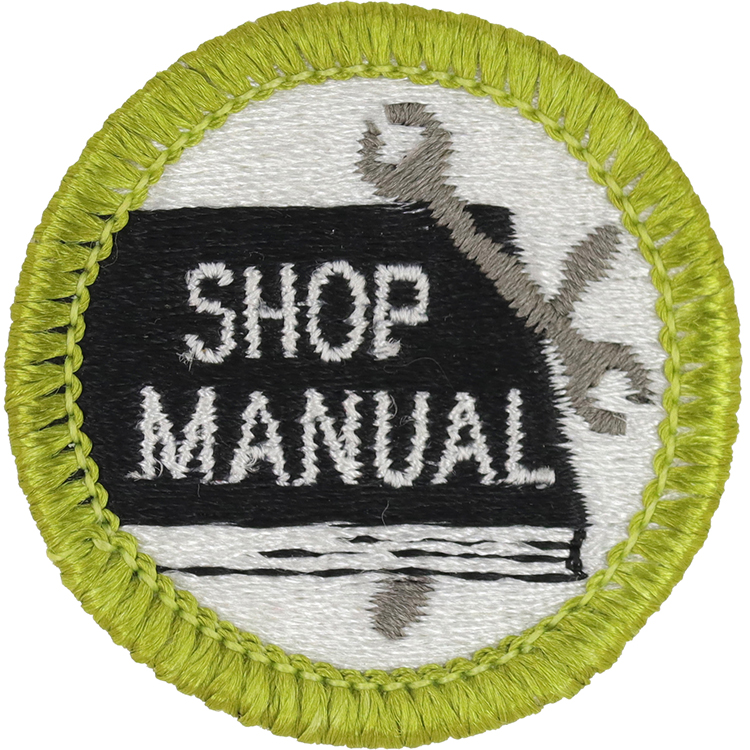
Fig. 1: AutMec-H5-Front
- Embroidery: Rayon thread
- Border: Merrowed
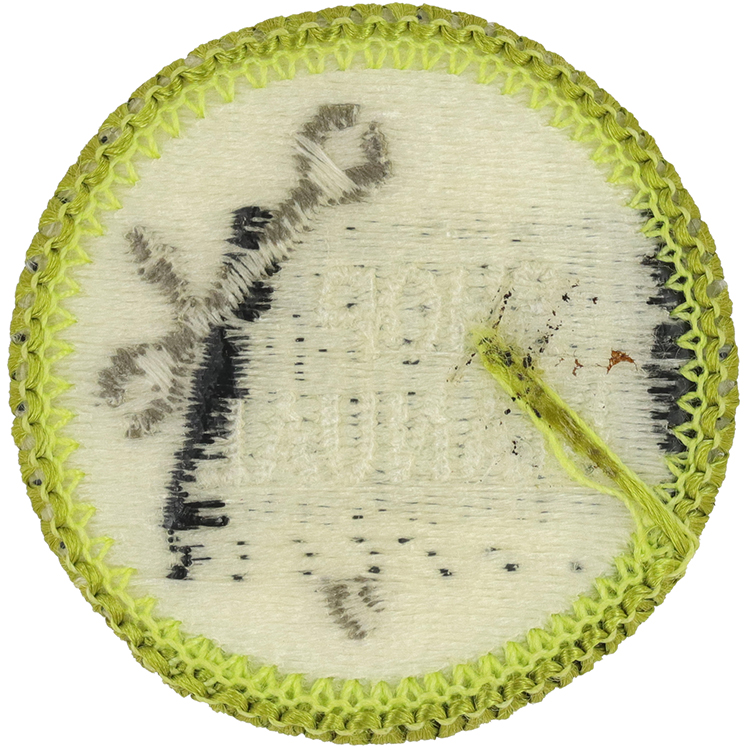
Fig. 2: AutMec-H5-Reverse
- Back: Molded plastic
Item Name: Automotive Mechanics 1990 - 2002
Item ID: AutMec-H5
Collector Rating: 1
Pamphlets Used to Earn this Badge


Requirements September 1991 until January 2001
Note: Access to an automobile or truck (with the owner’s manual) is needed to meet some of the requirements for this merit badge.
1. Discuss with your counselor the safety equipment, tools, and clothing used while checking or repairing a motor vehicle. Use the equipment, tools, and/or clothing (when needed or called for) in meeting the requirements for this merit badge.
2. Explain how an internal combustion engine operates and the differences between gasoline and diesel engines.
3. Demonstrate your knowledge of general maintenance. Do the following:
(a) Demonstrate how to check the fluid level of the following:
- Brake fluid
- Engine oil
- Coolant
- Power steering fluid
- Windshield washer fluid
- Transmission fluid (automatic and standard)
(b) Check battery fluid, if possible, and the condition of battery terminals.
(c) Show the location of fuse boxes and the size of fuses, and demonstrate the proper replacement of burned-out fuses.
(d) Review the maintenance chart in the owner’s manual. Explain the requirements and time limits.
(e) (1) Choose a car cleaner and wax product for the vehicle. Explain clear-coat paint and the precautions necessary for care. Clean and wax the vehicle, both inside and out.
(2) Use a vinyl and rubber protectant (on vinyl tops, rubber door seals, sidewalls, etc.) and explain the importance of this protectant.
(f) Demonstrate how to check the condition and tension of belts and hoses.
(g) Demonstrate the following:
(1) Check the lighting in the vehicle, including instrument, warning, and exterior bulbs.
(2) Check headlight alignment.
(h) Demonstrate how to check the vehicle exhaust system.
4. Demonstrate your knowledge of tires. Do the following:
(a) (1) Explain the difference between tire and vehicle manufacture’s information specifications and demonstrate where to find these specifications.
(2) Demonstrate how to check pressure and properly inflate a tire.
(3) Using the manufacturer’s jack supplied with the vehicle:
- Demonstrate how to engage the jack correctly on the vehicle.
- Demonstrate how to correctly change a tire.
(b) (1) Explain the difference between bias-belted tires and radial-belted tires.
(2) Diagram and explain in writing how to rotate bias-belted and radial-belted tires.
(3) Using the manufacture’s guidelines, rotate the tires on the vehicle.
(c) (1) Explain camber, caster, and toe-in adjustments on wheel alignment.
(2) Explain why wheel alignment is important to the life of a tire.
(d) Explain the purpose of the lateral-wear bar indicator.
(e) Explain how to dispose of old tires properly.
5. Demonstrate your knowledge of engine lubrication. Do the following:
(a) Explain the purpose of motor oil.
(b) Explain where to find the recommended type and amount of oil to be used in the vehicle engine.
(c) Explain the difference in viscosity (10w/30 versus SAE 30).
(d) Perform an oil change and oil filter change on the vehicle.
(e) Explain how to dispose of the used oil and filter properly.
6. Cooling system. Do the following:
(a) Explain the need for coolant in the cooling system.
(b) Flush and change the engine coolant in the vehicle according to the manufacturer’s instructions.
(c) Explain how to dispose of used coolant properly.
7. Demonstrate your knowledge of a fuel system. Do the following:
(a) Explain how the air and fuel system work together.
(b) Explain how a carburetor works and how a fuel-injection system works.
(c) Explain how an on-board computer works with the fuel injection system. Show where the computer is located.
(d) Explain why it is necessary to have an air filter and a fuel filter. Locate them and change them according to the manufacturer’s recommendations.
(e) Explain what fuel additives are, for both the carburetor and the fuel injection systems.
8. Demonstrate your knowledge of ignition and electrical systems.Do the following:
(a) Diagram and explain the parts of the electrical system.
(b) Explain the cylinder engine sequence.
(c) Explain the spark plug gap and, if practical, change the spark plug. (Use an engine with spark plugs that can reached without tilting the engine.)
(d) Demonstrate how to connect jumper cables on your battery properly. Explain how to jump-start a vehicle.
(e) Explain the difference between electronic and points ignition systems.
9. Demonstrate your knowledge of a drive train. Do the following:
(a) Diagram the drive train and explain the different parts.
(b) Explain the difference between automatic and standard transmissions.
(c) Explain the types of automatic transmission fluid.
(d) Explain the types of lubricants used in a standard transmission and in the differential.
(e) Explain the difference between front-wheel, rear-wheel, and four-wheel drive.
(f) Explain the gear ratio of the differential.
10. Demonstrate your knowledge of a brake system. Do the following:
(a) Explain the brake system (including anti-lock systems) and how it operates.
(b) Explain the differences between disk and shoe systems.
(c) Demonstrate checking conditions of a vehicle brake system. After checking the brake system, make a recommendation for repairs (if necessary).
11. Explain the purpose, importance, and limitations of passive restraints.
Requirements January 2001 until January 2009
Note: Access to an automobile or truck (with the owner’s manual) is needed to meet some of the requirements for this merit badge.
1. Discuss with your counselor the safety equipment, tools, and clothing used while checking or repairing a motor vehicle. Use the equipment, tools, and/or clothing (when needed or called for) in meeting the requirements for this merit badge.
2. Explain how an internal combustion engine operates and the differences between gasoline and diesel engines.
3. Demonstrate your knowledge of general maintenance. Do the following:
(a) Demonstrate how to check the fluid level of the following:
- Brake fluid
- Engine oil
- Coolant
- Power steering fluid
- Windshield washer fluid
- Transmission fluid (automatic and standard)
(b) Check battery fluid, if possible, and the condition of battery terminals.
(c) Show the location of fuse boxes and the size of fuses, and demonstrate the proper replacement of burned-out fuses.
(d) Review the maintenance chart in the owner’s manual. Explain the requirements and time limits.
(e) (1) Choose a car cleaner and wax product for the vehicle. Explain clear-coat paint and the precautions necessary for care. Clean and wax the vehicle, both inside and out.
(2) Use a vinyl and rubber protectant (on vinyl tops, rubber door seals, sidewalls, etc.) and explain the importance of this protectant.
(f) Demonstrate how to check the condition and tension of belts and hoses.
(g) Demonstrate the following:
(1) Check the lighting in the vehicle, including instrument, warning, and exterior bulbs.
(2) Check headlight alignment.
(h) Demonstrate how to check the vehicle exhaust system.
- Demonstrate your knowledge of tires. Do the following:
(a) (1) Explain the difference between tire and vehicle manufacture’s information specifications and demonstrate where to find these specifications.
(2) Demonstrate how to check pressure and properly inflate a tire.
(3) Using the manufacturer’s jack supplied with the vehicle:
- Demonstrate how to engage the jack correctly on the vehicle.
- Demonstrate how to correctly change a tire.
(b) (1) Explain the difference between bias-belted tires and radial-belted tires.
(2) Diagram and explain in writing how to rotate bias-belted and radial-belted tires.
(3) Using the manufacture’s guidelines, rotate the tires on the vehicle.
(c) (1) Explain camber, caster, and toe-in adjustments on wheel alignment.
(2) Explain why wheel alignment is important to the life of a tire.
(d) Explain the purpose of the lateral-wear bar indicator.
(e) Explain how to dispose of old tires properly.
5. Demonstrate your knowledge of engine lubrication. Do the following:
(a) Explain the purpose of motor oil.
(b) Explain where to find the recommended type and amount of oil to be used in the vehicle engine.
(c) Explain the difference in viscosity (10w/30 versus SAE 30).
(d) Perform an oil change and oil filter change on the vehicle.
(e) Explain how to dispose of the used oil and filter properly.
6. Cooling system. Do the following:
(a) Explain the need for coolant in the cooling system.
(b) Flush and change the engine coolant in the vehicle according to the manufacturer’s instructions.
(c) Explain how to dispose of used coolant properly.
7. Demonstrate your knowledge of a fuel system. Do the following:
(a) Explain how the air and fuel system work together.
(b) Explain how a carburetor works and how a fuel-injection system works.
(c) Explain how an on-board computer works with the fuel injection system. Show where the computer is located.
(d) Explain why it is necessary to have an air filter and a fuel filter. Locate them and change them according to the manufacturer’s recommendations.
(e) Explain what fuel additives are, for both the carburetor and the fuel injection systems.
8. Demonstrate your knowledge of ignition and electrical systems. Do the following:
(a) Diagram and explain the parts of the electrical system.
(b) Explain the cylinder engine sequence.
(c) Explain the spark plug gap and, if practical, change the spark plug. (Use an engine with spark plugs that can reached without tilting the engine.)
(d) Demonstrate how to connect jumper cables on your battery properly. Explain how to jump-start a vehicle.
(e) Explain the difference between electronic and points ignition systems.
9. Demonstrate your knowledge of a drive train. Do the following:
(a) Diagram the drive train and explain the different parts.
(b) Explain the difference between automatic and standard transmissions.
(c) Explain the types of automatic transmission fluid.
(d) Explain the types of lubricants used in a standard transmission and in the differential.
(e) Explain the difference between front-wheel, rear-wheel, and four-wheel drive.
(f) Explain the gear ratio of the differential.
10. Demonstrate your knowledge of a brake system. Do the following:
(a) Explain the brake system (including anti-lock systems) and how it operates.
(b) Explain the differences between disk and drum systems.
(c) Demonstrate checking conditions of a vehicle brake system. After checking the brake system, make a recommendation for repairs (if necessary).
11. Explain the purpose, importance, and limitations of passive restraints.