-
Merit Badges
- Legend to identify Merit Badges
- 1910 British Merit Badges
- Square 1911 - 33
- Wide Crimped 1934 & 35
-
Narrow Tan Crimped 1936 - 42
- Tan Heavyweight Cloth with Silk Embroidery and Printed Back 1936 - 37
- Tan Heavyweight Cloth with Silk Embroidery and Plain Back 1937 - 38
- Tan Lightweight Cloth with Silk Embroidery and Plain Back 1938 - 39
- Tan Lightweight Cloth with Cotton Continuous Loop Embroidery and Plain Back 1939 - 42
- Tan Lightweight Cloth with Cotton Lockstitch Embroidery and Plain Back 1939 - 42
- Blue Background 1942 - 46
- Wartime 1942 - 46
- Khaki Narrow Crimped 1946 - 59
- Green Twill Gauze Back 1960 - 68
- Fully Embroidered Merrowed Edge 1960 - 72
- Unprinted Plastic Back 1972 - 01
- Printed Plastic Back 2002 - Current
-
Merit Badge Paper
- Merit Badge Applications
- Merit Badge Cards
-
Merit Badge Pamphlets
- Type 1 White Cover - Rectangle Drawing On Cover
- Type 2 White Cover 5-375" x 8" Title at Top
- Type 3A Tan Cover - 200 Fifth Avenue
- Type 3B Tan Cover - 2 line address New York City
- Type 3C Tan Cover - 2 line address New York N.Y.
- Type 3D Tan Cover - 1 line address New York N.Y.
- Type 4 Standing Scout Cover
- Type 5A War Cover
- Type 5B Red and White
- Type 6 Photo-Red Cover
- Type 7 Full Photo Cover or Bulls-eye Cover
- Type 8 Full Photo - Green Stripe Cover
- Type 9 Full Photo - Red Stripe Cover
- Type 10A Blue Stripe - Logo above bottom blue stripe - FDL centered
- Type 10B - Blue Stripe in bottom of photo area. FDL to left of text
- Special Covers
- Boy Craft Helps
- Merit Badge Counselor's Guides
-
Youth Position
- Junior Assistant Scoutmaster
- Senior Patrol Leader
- Assistant Senior Patrol Leader
- Patrol Leader
- Assistant Patrol Leader
- Troop Guide
- Scribe
- Quartermaster
- Instructor
- Chaplain Aide
- Den Chief
- Librarian
- Musician
- Webmaster
- Bugler
- Troop Historian
- Troop Representative
- Unit Representative
- Leadership Corps
- Honor Guard
- Leave No Trace Trainer
- Outdoor Ethics Guide
-
Patrol Medallions
- Patrol Medallions Introduction
- Legend to identify Patrol Medallions
- Patrol Shoulder Knot-Ribbons
- Felt Handmade Patrol Medallions
- Square Felt Patrol Medallions
- Round Broadcloth Patrol Medallions
- Red Twill Patrol Medallions
- Multi-Color Cloth Patrol Medallions
- Tan Cloth Patrol Medallions
- Patrol Medallion Back Patches
- Woodbadge Patrol Medallion

Fig. 1: Comput-H2-Front
- Embroidery: Cotton thread
- Border: Merrowed
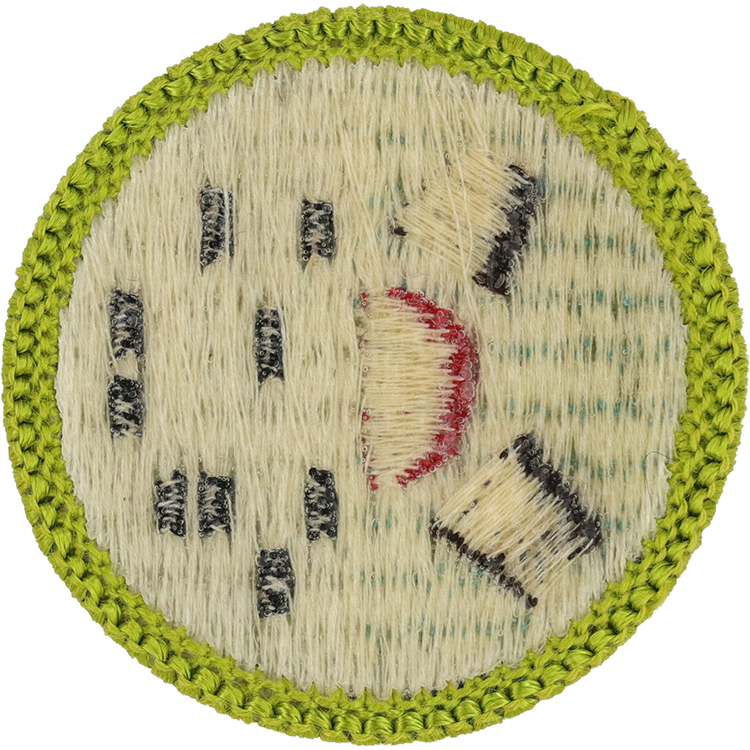
Fig. 2: Comput-H2-Reverse
- Back: Clear plastic with waffle pattern
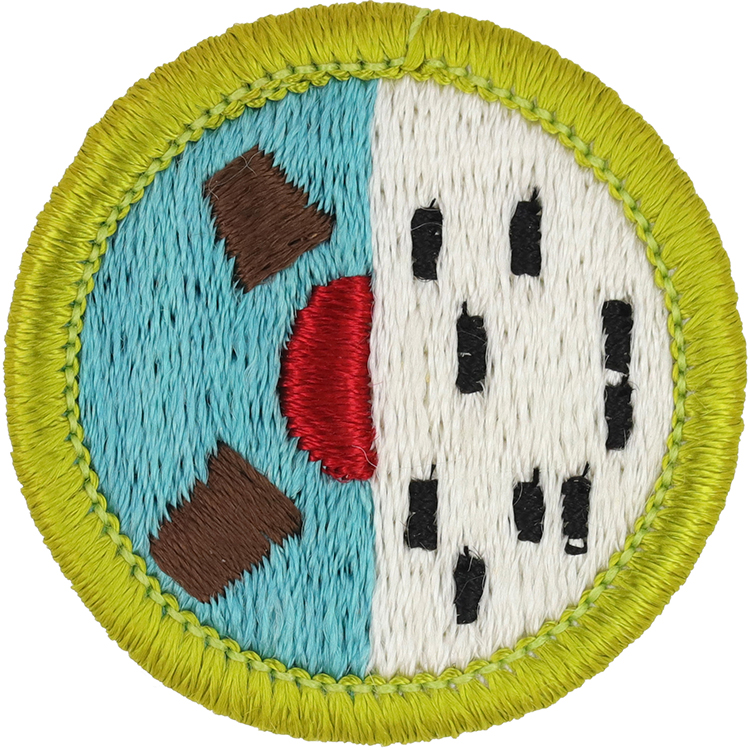
Fig. 3: Comput-H2-mve1-front
- Minor variation: Light green border
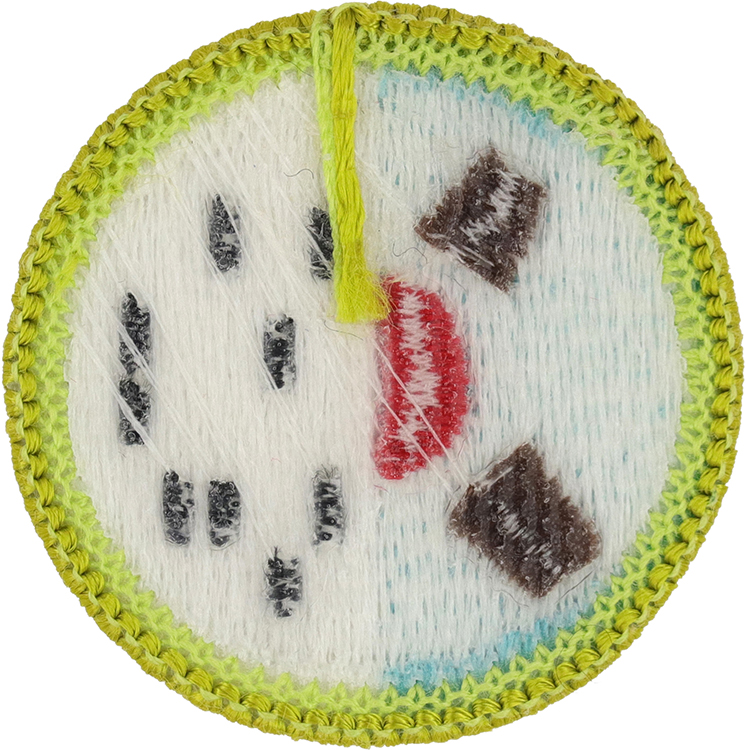
Fig. 4: Comput-H2-mve1-reverse
- Back: Clear plastic with waffle pattern
Item Name: Computers 1972 - 1975
Item ID: Comput-H2
Collector Rating: 1
Pamphlets Used to Earn this Badge


Requirements June 1972 until January 1975
1. Do the following:
(a) Give a short history of computers. Describe the major parts of a computer system. Give four different uses of computers.
(b) Describe the differences between analog and digital computers. Tell the use of each.
(c) Explain the differences between special and general use machines.
2. Do the following:
(a) Tell what a program is. Tell how it is set up.
(b) Explain the difference between an assembler and a compiler. Tell where each might be used. Describe a source and an object program.
(c) Use a flowchart diagram to show the steps needed to set up a camp.
3. Do ONE of the following:
(a) Prepare flowcharts to find out the average attendance and dues paid at the last five troop meetings.
(b) Prepare flowcharts to work out a simple arithmetic program.
Explain to your counselor how this program could be stored in a computer. Tell how it could be used again.
4. Do the following:
(a) Name four input-output devices for computers. Explain the use of two of them in a system.
(b) Explain the Hollerith code. Show how your name and address would be punched on a card.
5. Tell the meaning of SIX of the following:
memory
bits
bytes
microsecond
address
channel
interrupt
register
console
central processing unit
6. Tell the meaning and use of 12 of the following:
business data processing
information retrieval
simulation
scientific processing
floating point
truncation
fixed point
accuracy
input
record
output
file
software
instruction
hardware
indexing
loop subroutine
real time
time sharing
cybernetics
7. Visit a computer installation. Study how it works.
8. Explain what each of the following does:
(a) design engineer
customer engineer
programmer
analyst
operator
salesman
(b) Get and read two pieces of information about computers from your library. Describe what you read.
(c) Describe jobs in the computer field.
Requirements January 1975 until August 1982
1. Do the following:
(a) Give a short history of computers. Describe the major parts of a computer system. Give four different uses of computers.
(b) Describe the differences between analog and digital computers. Tell the use of each.
(c) Explain the differences between special and general purpose machines.
2. Do the following:
(a) Tell what a program is and how it is developed.
(b) Explain the difference between an assembler and a compiler. Tell where each might be used. Describe a source and an object program.
(c) Use a flowchart diagram to show the steps needed to set up a camp.
3. Do ONE of the following:
(a) Prepare flowcharts to find out the average attendance and dues paid at the last five troop meetings.
(b) Prepare flowcharts to work out a simple arithmetic problem. Explain to your counselor how this program could be stored in a computer. Tell how it could be used again.
4. Do the following:
(a) Name four imput-output devices for computers. Explain the use of two of them in a system.
(b) Explain the Hollerith code. Show how your name and address would be punched on a card.
5. Tell the meaning of SIX of the following: Memory, bits, on-line, bytes, microsecond, address, channel, interrupt, register, console, and central processing unit.
6. Tell the meaning and use of TWELVE of the following: Business data processing, information retrieval, simulation, scientific processing, floating point, truncation, fixed point, accuracy, input, record, output, file, software, instruction, hardware, indexing, loop, subroutine, real time, time sharing, and cybernetics.
7. Visit a computer installation. Study how it works.
(a) Explain what each of the following does: Design engineer, customer engineer, programmer, analyst, operator, and salesman.
(b) Read two pieces of information about computers. Describe what you read.
(c) Describe jobs in the computer field.