-
Merit Badges
- Legend to identify Merit Badges
- 1910 British Merit Badges
- Square 1911 - 33
- Wide Crimped 1934 & 35
-
Narrow Tan Crimped 1936 - 42
- Tan Heavyweight Cloth with Silk Embroidery and Printed Back 1936 - 37
- Tan Heavyweight Cloth with Silk Embroidery and Plain Back 1937 - 38
- Tan Lightweight Cloth with Silk Embroidery and Plain Back 1938 - 39
- Tan Lightweight Cloth with Cotton Continuous Loop Embroidery and Plain Back 1939 - 42
- Tan Lightweight Cloth with Cotton Lockstitch Embroidery and Plain Back 1939 - 42
- Blue Background 1942 - 46
- Wartime 1942 - 46
- Khaki Narrow Crimped 1946 - 59
- Green Twill Gauze Back 1960 - 68
- Fully Embroidered Merrowed Edge 1960 - 72
- Unprinted Plastic Back 1972 - 01
- Printed Plastic Back 2002 - Current
-
Merit Badge Paper
- Merit Badge Applications
- Merit Badge Cards
-
Merit Badge Pamphlets
- Type 1 White Cover - Rectangle Drawing On Cover
- Type 2 White Cover 5-375" x 8" Title at Top
- Type 3A Tan Cover - 200 Fifth Avenue
- Type 3B Tan Cover - 2 line address New York City
- Type 3C Tan Cover - 2 line address New York N.Y.
- Type 3D Tan Cover - 1 line address New York N.Y.
- Type 4 Standing Scout Cover
- Type 5A War Cover
- Type 5B Red and White
- Type 6 Photo-Red Cover
- Type 7 Full Photo Cover or Bulls-eye Cover
- Type 8 Full Photo - Green Stripe Cover
- Type 9 Full Photo - Red Stripe Cover
- Type 10A Blue Stripe - Logo above bottom blue stripe - FDL centered
- Type 10B - Blue Stripe in bottom of photo area. FDL to left of text
- Special Covers
- Boy Craft Helps
- Merit Badge Counselor's Guides
-
Youth Position
- Junior Assistant Scoutmaster
- Senior Patrol Leader
- Assistant Senior Patrol Leader
- Patrol Leader
- Assistant Patrol Leader
- Troop Guide
- Scribe
- Quartermaster
- Instructor
- Chaplain Aide
- Den Chief
- Librarian
- Musician
- Webmaster
- Bugler
- Troop Historian
- Troop Representative
- Unit Representative
- Leadership Corps
- Honor Guard
- Leave No Trace Trainer
- Outdoor Ethics Guide
-
Patrol Medallions
- Patrol Medallions Introduction
- Legend to identify Patrol Medallions
- Patrol Shoulder Knot-Ribbons
- Felt Handmade Patrol Medallions
- Square Felt Patrol Medallions
- Round Broadcloth Patrol Medallions
- Red Twill Patrol Medallions
- Multi-Color Cloth Patrol Medallions
- Tan Cloth Patrol Medallions
- Patrol Medallion Back Patches
- Woodbadge Patrol Medallion
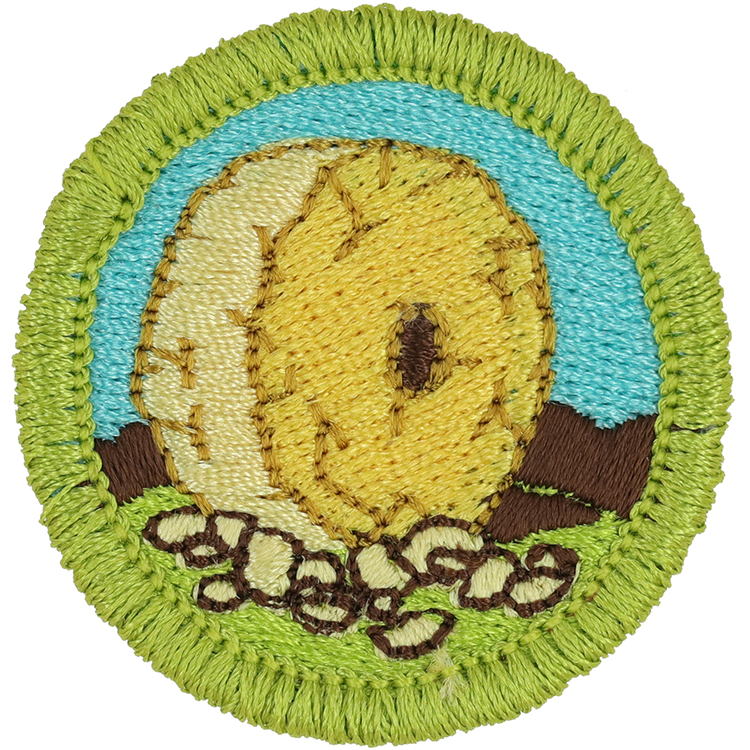
Fig. 1: Invent-K-Front
- Embroidery: Rayon thread
- Border: Merrowed
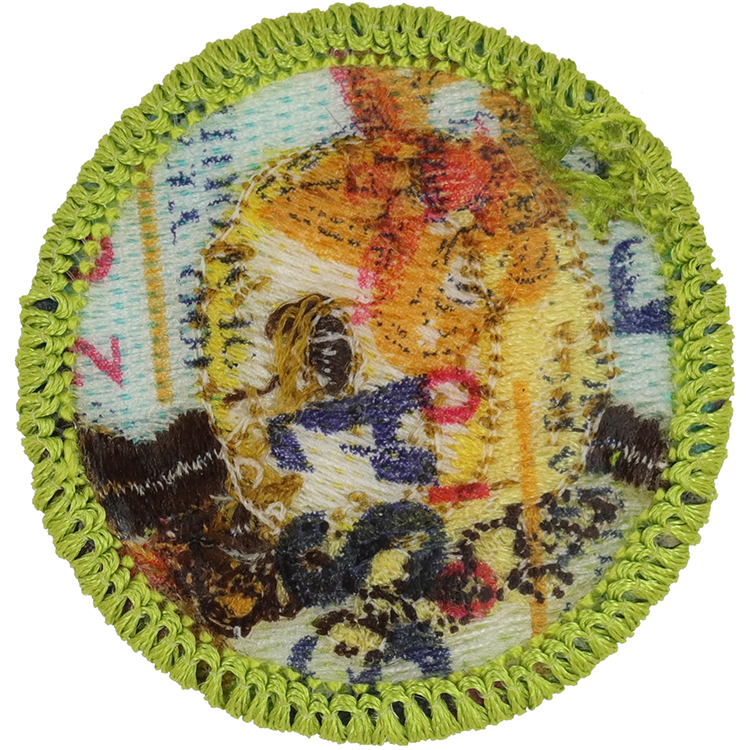
Fig. 2: Invent-K-Reverse
- Back: 100th Anniversary imprint
Item Name: Inventing 2011 - 2013
Item ID: Invent-K
Collector Rating: 1
Pamphlets Used to Earn this Badge

Requirements January 2011 until Current
1. In your own words, define inventing. Then do the following:
- Explain to your merit badge counselor the role of inventors and their inventions in the economic development of the United States.
- List three inventions and state how they have helped humankind.
2. Do ONE of the following:
- Identify and interview with a buddy (and with your parent’s permission and merit badge counselor’s approval) an individual in your community who has invented a useful item. Report what you learned to your counselor.
- Read about three inventors. Select the one you find most interesting and tell your counselor what you lerned.
3. Do EACH of the following:
- Define the term intellectual property. Explain which government agencies oversea the protection of intellectual property, the types of intellectual property that can be protected, how such property is protected, and why protection is necessary
- Explain the components of a patent and the different types of patents available.
- Examine your Scouting gear and find a patent number on a camping item you have used. With your parent’s permission, use the Internet to find out more about that patent. Compare the finished item with the claims and drawings in the patent. Report what you learned to your counselor.
- Explain to your counselor the term patent infringement.
4. Discuss with your counselor the types of inventions that are appropriate to share with others, and explain why. Tell your counselor about one nonpatented or noncopyrighted invention and its impact on society.
5. Choose a commercially available product that you have used on an overnight camping trip with your troop. Make recommendations for improving the product, an make a sketch that shows your recommendations. Discuss your recommendations with your counselor.
6. Think of an item you would like to invent that would solve a problem for your family, chartered organization, community, or a special-interest group. Then do ECAH of the following, while keeping a notebook to record your progress.
- Talk to potential users of your invention and determine their needs. Then, based on what you have learned, write a statement describing the invention and how it would help solve a problem. This statement should include a detailed sketch of the invention.
- Create a model of the invention using clay, cardboard, or any other readily available material. List the materials necessary to build a prototype of the invention.
- Share the idea and the model with your counselor and potential users of your invention. Record their feedback in your notebook.
7. Build a working prototype of the item you invented for requirement 6*. Test and evaluate the invention. Among the aspects to consider in your evaluation are cost, usefulness, marketability, appearance, and function. Describe how your original vision and expectations for your invention are similar or dissimiliar to the prototype you built. Have your counselor evaluate and critique your prototype.
8. Do ONE of the following:
- Participate with a club or team (robotics team, science club, or engineering club) that builds a useful item. Share your experience with your counselor.
- Visit a museum or exhibit dedicated to an invention, and create a presentation of your visit to share with a group such as your troop or patrol.
9. Discuss with your counselor the diverse skill, education, training, and experience it takes to be an inventor. Discuss how you can prepare yourself to be creative and inventive to solve problems at home, in school, and in your community. Discuss three career fields that might utilize the skills of an inventor.
*Before you begin building the prototype, you must have your counselor’s approval, based on the design and building plans you have already shared.