-
Merit Badges
- Legend to identify Merit Badges
- 1910 British Merit Badges
- Square 1911 - 33
- Wide Crimped 1934 & 35
-
Narrow Tan Crimped 1936 - 42
- Tan Heavyweight Cloth with Silk Embroidery and Printed Back 1936 - 37
- Tan Heavyweight Cloth with Silk Embroidery and Plain Back 1937 - 38
- Tan Lightweight Cloth with Silk Embroidery and Plain Back 1938 - 39
- Tan Lightweight Cloth with Cotton Continuous Loop Embroidery and Plain Back 1939 - 42
- Tan Lightweight Cloth with Cotton Lockstitch Embroidery and Plain Back 1939 - 42
- Blue Background 1942 - 46
- Wartime 1942 - 46
- Khaki Narrow Crimped 1946 - 59
- Green Twill Gauze Back 1960 - 68
- Fully Embroidered Merrowed Edge 1960 - 72
- Unprinted Plastic Back 1972 - 01
- Printed Plastic Back 2002 - Current
-
Merit Badge Paper
- Merit Badge Applications
- Merit Badge Cards
-
Merit Badge Pamphlets
- Type 1 White Cover - Rectangle Drawing On Cover
- Type 2 White Cover 5-375" x 8" Title at Top
- Type 3A Tan Cover - 200 Fifth Avenue
- Type 3B Tan Cover - 2 line address New York City
- Type 3C Tan Cover - 2 line address New York N.Y.
- Type 3D Tan Cover - 1 line address New York N.Y.
- Type 4 Standing Scout Cover
- Type 5A War Cover
- Type 5B Red and White
- Type 6 Photo-Red Cover
- Type 7 Full Photo Cover or Bulls-eye Cover
- Type 8 Full Photo - Green Stripe Cover
- Type 9 Full Photo - Red Stripe Cover
- Type 10A Blue Stripe - Logo above bottom blue stripe - FDL centered
- Type 10B - Blue Stripe in bottom of photo area. FDL to left of text
- Special Covers
- Boy Craft Helps
- Merit Badge Counselor's Guides
-
Youth Position
- Junior Assistant Scoutmaster
- Senior Patrol Leader
- Assistant Senior Patrol Leader
- Patrol Leader
- Assistant Patrol Leader
- Troop Guide
- Scribe
- Quartermaster
- Instructor
- Chaplain Aide
- Den Chief
- Librarian
- Musician
- Webmaster
- Bugler
- Troop Historian
- Troop Representative
- Unit Representative
- Leadership Corps
- Honor Guard
- Leave No Trace Trainer
- Outdoor Ethics Guide
-
Patrol Medallions
- Patrol Medallions Introduction
- Legend to identify Patrol Medallions
- Patrol Shoulder Knot-Ribbons
- Felt Handmade Patrol Medallions
- Square Felt Patrol Medallions
- Round Broadcloth Patrol Medallions
- Red Twill Patrol Medallions
- Multi-Color Cloth Patrol Medallions
- Tan Cloth Patrol Medallions
- Patrol Medallion Back Patches
- Woodbadge Patrol Medallion
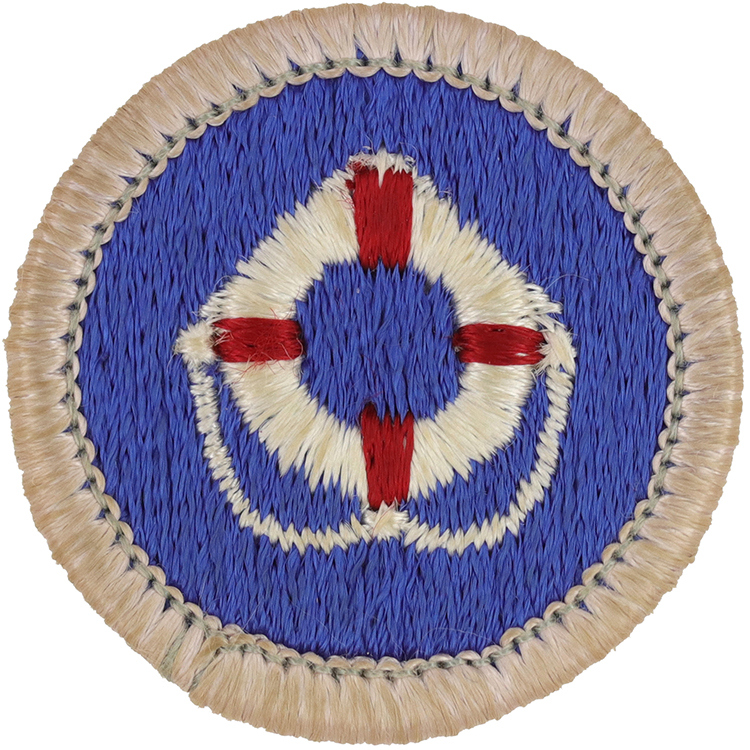
Fig. 1: Lifesa-H4-Front
- Embroidery: Cotton thread, dull sheen
- Border: Silver merrowed
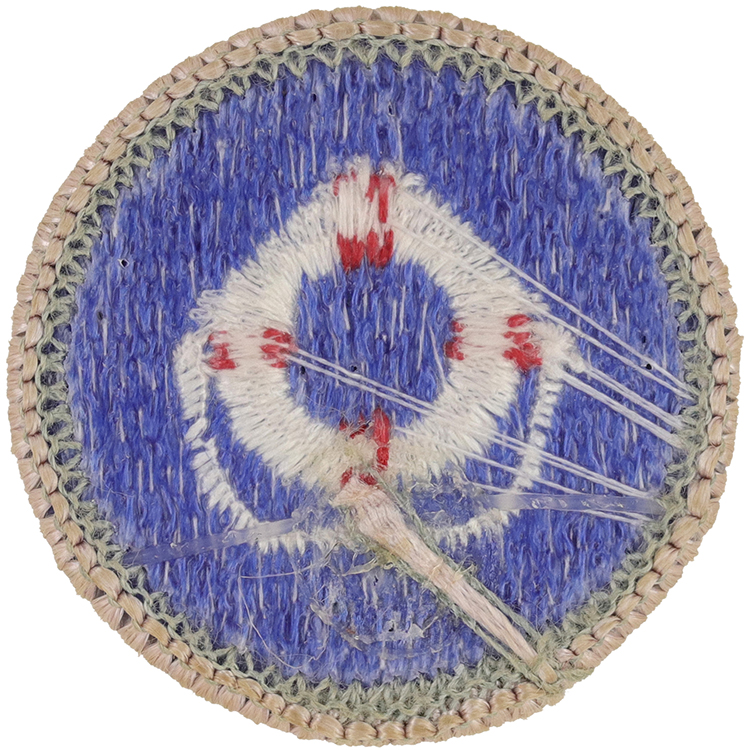
Fig. 2: Lifesa-H4-Reverse
- Back: Molded plastic
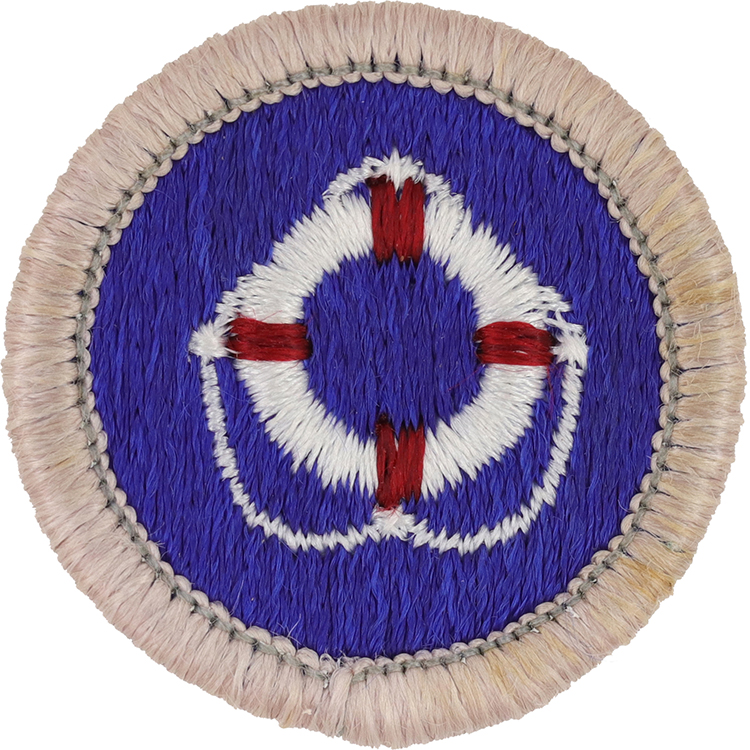
Fig. 3: Lifesa-H4-mve1-front
- Embroidery: Cotton thread, dull sheen
- Border: Silver merrowed
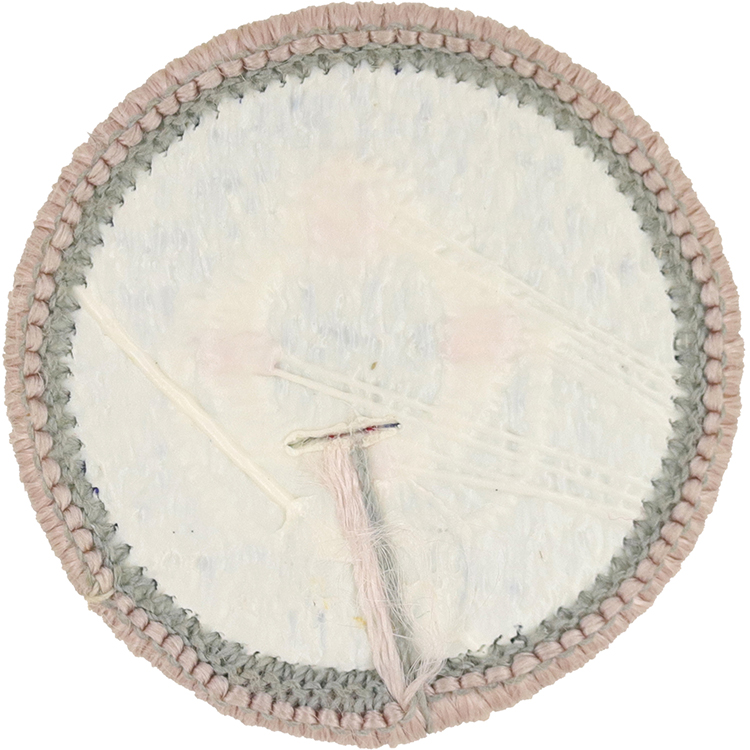
Fig. 4: Lifesa-H4-mve1-reverse
- Minor variation: White molded plastic
Item Name: Lifesaving 1978 - 1990
Item ID: Lifesa-H4
Collector Rating: 1
Pamphlets Used to Earn this Badge


Requirement June 1972 until July 1980
1. Before doing the following requirements:
(a) Earn Swimming merit badge.
(b) Swim 440 yards.
2. Spend 6 hours practicing lifesaving skills.
3. Explain:
(a) The Safe Swim Defense.
(b) The order of methods to be followed in lifesaving.
4. Show reaching rescues using such things as arms, legs, branches, sticks, towels, shirts, paddles, or poles.
5. Show rescues using things that can be thrown such as lines, ring buoys, and free-floating supports such as boat cushions.
6. Show the use of floating devices such as boats, canoes, and boards in making rescues.
7. With a helper and subject, show a line rescue both as line tender and as rescuer. Use a 50-foot length of line. If you have one, use a torpedo buoy on a surf line should also be shown.
8. Show twice that you can take off street clothes*, except underwear or swim trunks, in 20 seconds or less. Explain the importance of taking off clothes before trying a swimming rescue.
9. Make a leaping or running entry into water. Show the correct approach to a drowning person who is in the following position: Back to you, face to you with head above and also below water.
10. Keeping a struggling person in sight, enter the water feet first by jumping or running.
(a) Swim 30 feet. Make the correct approach. Tow the subject 30 feet to shore with a cross-chest tow.
(b) Swim 30 feet. Make the correct approach. Tow the subject 30 feet to shore with a wrist tow.
In each case put the subject on a deck or shore. Use the proper lift to carry him from the water.
11. Show in deep water your defence against grasps by blocking, turning, and placing the subject in position for towing to shore.
12. Swim 30 feet. Make the correct approach to a tired swimmer. Move him 30 feet to safety using:
(a) Foot push.
(b) Underarm swim-along.
(c) Tired swimmer's push (subject on back).
13. Make four surface dives in 6 to 8 feet of water. Bring up different things three times.Bring up a 10-pound weight once.
14. Show search techniques:
(a) As a part of a (lost bather's drill" team.
(b) As a lone diver using a mask, fins, and a snorkel (not scuba).
15. Take off clothes in the water. Show how street clothes* can be blown up to help hold you up. Use your shirt and pants. Then swim 100 yards.
16. Explain artificial respiration. Show you know how to give rescue breathing (mouth-to-mouth or mouth-to-nose) and manually (chest-pressure arm-lift or back-pressure arm-lift).
*Street clothes means low shoes, socks, underwear (or trunks), pants, belt, long-sleeve shirt, and jacket or sweat shirt.
Requirements July 1980 until August 1982
1. Before doing the following requirements:
(a) Earn Swimming merit badge.
(b) Swim 400 meters (440 yards).
2. Explain:
(a) The Safe Swim Defence.
(b) The order of methods in water rescue.
3. Show reaching rescues using such things as arms, legs, branches, sticks, towels, shirts, paddles, and pole.
4. Show rescues using items that cam be thrown, such as lines, ring buoys, and free-floating supports.
5. Show or explain the use of rowboats, canoes, and other small craft in making rescues.
6. With a helper and a subject, show a line rescue both as tender and as rescuer. Use a 15-meter (50-foot) length of line. If available, demonstrate the use of a torpedo buoy and rescue tube.
7. Show twice that you can remove street clothes* on shore (except underwear or swim trunks) in 20 seconds or less. Explain the importance of disrobing before a swimming rescue.
8. Explain the importance of avoiding contact with a subject explain "lead" and "wait" tactics and explain why equipment should be used in a swimming rescue.
9. Swim 9 meters (30 feet) and make the correct approach to a tired swimmer. Move him 9 meters (30 feet) to safety using: (a) under-arm swim-along, (b) two-man assist, (c) tired swimmer carry.
10. Keeping the practice victim in sight at all times, make a leaping entry, swim 9 meters (30 feet) with a strong approach stroke, and tow the subject back to pier or pool-side using:
(a) a shirt or other equipment
(b) the rear approach and cross-chest tow
(c) the front approach and wrist tow.
Remove the practice victim from the water and place in position for resuscitation.
11. Show in deep water your defence against grasps by blocking, and escaping. Free yourself from both front and rear holds.
12. Make four surface dives in 2.4 meters (8 feet) of water. Retrieve an object three times. Bring up a 10-pound weight once.
13. Show search techniques:
(a) As a part of a lost swimmer drill.
(b) As a diver using mask, fins, and a snorkel (not scuba).
14. Explain cardiopulmonary resuscitation and show evidence of having completed a minimum of 3 hours instruction in CPR skills by a recognized agency.
*"Street clothes" means low shoes, socks, underwear (or trunks), pants, belt, and long-sleeve shirt. A jacket or sweater or sweat shirt also may be worn.
At the present time, a recognized agency means the American Red Cross or the American Heart Association.
Requirements August 1982 until September 1993.
1. Before doing the following requirements:
(a) Earn Swimming merit badge.
(b) Swim 400 meters (440 yards).
2. Explain:
(a) The Safe Swim Defence.
(b) The order of methods in water rescue.
3. Show reaching rescues using such things as arms, legs, branches, sticks, towels, shirts, paddles, and poles.
4. Show rescues using items that cam be thrown, such as lines, ring buoys, and free-floating supports.
5. Show or explain the use of rowboats, canoes, and other small craft in making rescues.
6. With a helper and a subject, show a line rescue both as tender and as rescuer. Use a 15-meter (50-foot) length of line. If available, demonstrate the use of a torpedo buoy and rescue tube.
7. Show twice that you can remove street clothes* on shore (except underwear or swim trunks) in 20 seconds or less. Explain the importance of disrobing before a swimming rescue.
8. Explain the importance of avoiding contact with a subject explain "lead" and "wait" tactics and explain why equipment should be used in a swimming rescue.
9. Swim 9 meters (30 feet) and make the correct approach to a tired swimmer. Move him 9 meters (30 feet) to safety using: (a) under-arm swim-along, (b) two-man assist, (c) tired swimmer carry.
10. Keeping the practice victim in sight at all times, make a leaping entry, swim 9 meters (30 feet) with a strong approach stroke, and tow the subject back to pier or pool-side using:
(a) a shirt or other equipment
(b) the rear approach and cross-chest tow
(c) the front approach and wrist tow.
Remove the practice victim from the water and place in position for resuscitation.
11. Show in deep water your defence against grasps by blocking, and escaping. Free yourself from both front and rear holds.
12. Make four surface dives in 2.4 meters (8 feet) of water. Retrieve an object three times. Bring up a 10-pound weight once.
13. Show search techniques:
(a) As a part of a lost swimmer drill.
(b) As a diver using mask, fins, and a snorkel (not scuba).
14. Explain cardiopulmonary resuscitation (CPR) and show evidence of having completed a minimum of 3 hours instruction (not certification) in CPR skills.
*"Street clothes" means low shoes, socks, underwear (or trunks), pants, belt, and long-sleeve shirt. A jacket or sweater or sweat shirt also may be worn.
** Resources for CPR instruction include local chapters of the American Red Cross, the American Heart Association, rescue squads, fire departments, hospitals, medical societies, BPA Aquatic instructors, YMCA Aquatic instructors, or any person having completed the CPR basic life support course.