-
Merit Badges
- Legend to identify Merit Badges
- 1910 British Merit Badges
- Square 1911 - 33
- Wide Crimped 1934 & 35
-
Narrow Tan Crimped 1936 - 42
- Tan Heavyweight Cloth with Silk Embroidery and Printed Back 1936 - 37
- Tan Heavyweight Cloth with Silk Embroidery and Plain Back 1937 - 38
- Tan Lightweight Cloth with Silk Embroidery and Plain Back 1938 - 39
- Tan Lightweight Cloth with Cotton Continuous Loop Embroidery and Plain Back 1939 - 42
- Tan Lightweight Cloth with Cotton Lockstitch Embroidery and Plain Back 1939 - 42
- Blue Background 1942 - 46
- Wartime 1942 - 46
- Khaki Narrow Crimped 1946 - 59
- Green Twill Gauze Back 1960 - 68
- Fully Embroidered Merrowed Edge 1960 - 72
- Unprinted Plastic Back 1972 - 01
- Printed Plastic Back 2002 - Current
-
Merit Badge Paper
- Merit Badge Applications
- Merit Badge Cards
-
Merit Badge Pamphlets
- Type 1 White Cover - Rectangle Drawing On Cover
- Type 2 White Cover 5-375" x 8" Title at Top
- Type 3A Tan Cover - 200 Fifth Avenue
- Type 3B Tan Cover - 2 line address New York City
- Type 3C Tan Cover - 2 line address New York N.Y.
- Type 3D Tan Cover - 1 line address New York N.Y.
- Type 4 Standing Scout Cover
- Type 5A War Cover
- Type 5B Red and White
- Type 6 Photo-Red Cover
- Type 7 Full Photo Cover or Bulls-eye Cover
- Type 8 Full Photo - Green Stripe Cover
- Type 9 Full Photo - Red Stripe Cover
- Type 10A Blue Stripe - Logo above bottom blue stripe - FDL centered
- Type 10B - Blue Stripe in bottom of photo area. FDL to left of text
- Special Covers
- Boy Craft Helps
- Merit Badge Counselor's Guides
-
Youth Position
- Junior Assistant Scoutmaster
- Senior Patrol Leader
- Assistant Senior Patrol Leader
- Patrol Leader
- Assistant Patrol Leader
- Troop Guide
- Scribe
- Quartermaster
- Instructor
- Chaplain Aide
- Den Chief
- Librarian
- Musician
- Webmaster
- Bugler
- Troop Historian
- Troop Representative
- Unit Representative
- Leadership Corps
- Honor Guard
- Leave No Trace Trainer
- Outdoor Ethics Guide
-
Patrol Medallions
- Patrol Medallions Introduction
- Legend to identify Patrol Medallions
- Patrol Shoulder Knot-Ribbons
- Felt Handmade Patrol Medallions
- Square Felt Patrol Medallions
- Round Broadcloth Patrol Medallions
- Red Twill Patrol Medallions
- Multi-Color Cloth Patrol Medallions
- Tan Cloth Patrol Medallions
- Patrol Medallion Back Patches
- Woodbadge Patrol Medallion
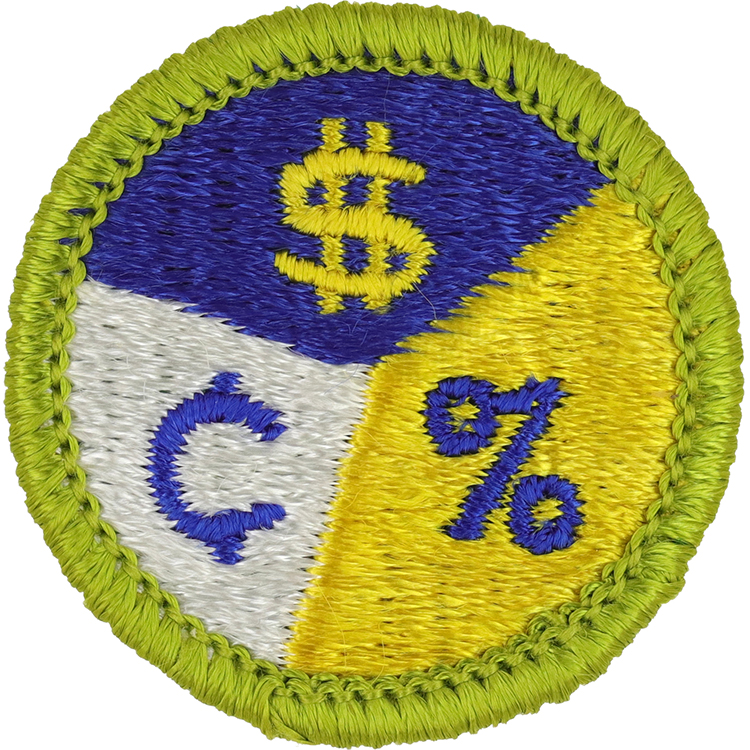
Fig. 1: PerFin-H2-Front
- Embroidery: Cotton thread
- Border: Merrowed
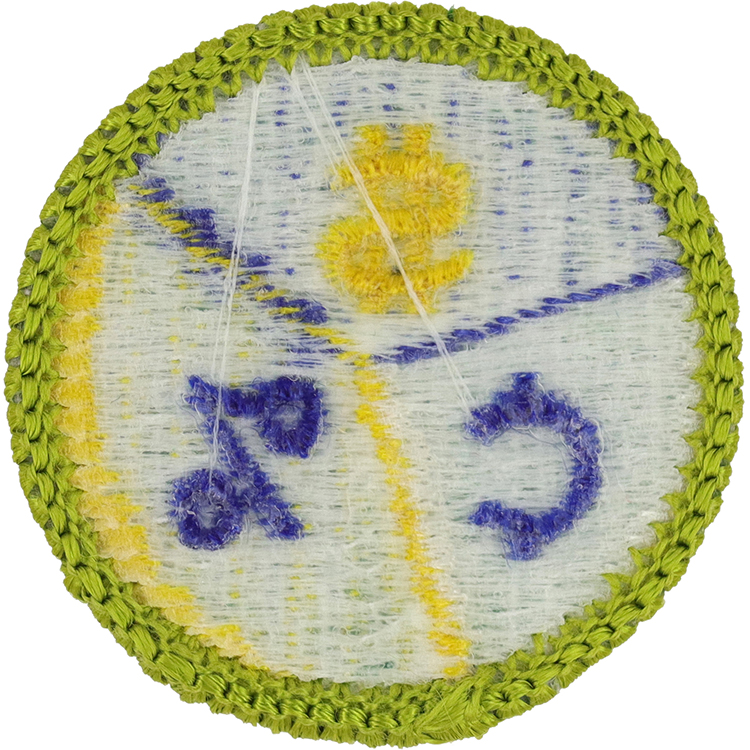
Fig. 2: PerFin-H2-Reverse
- Back: Clear plastic with waffle pattern
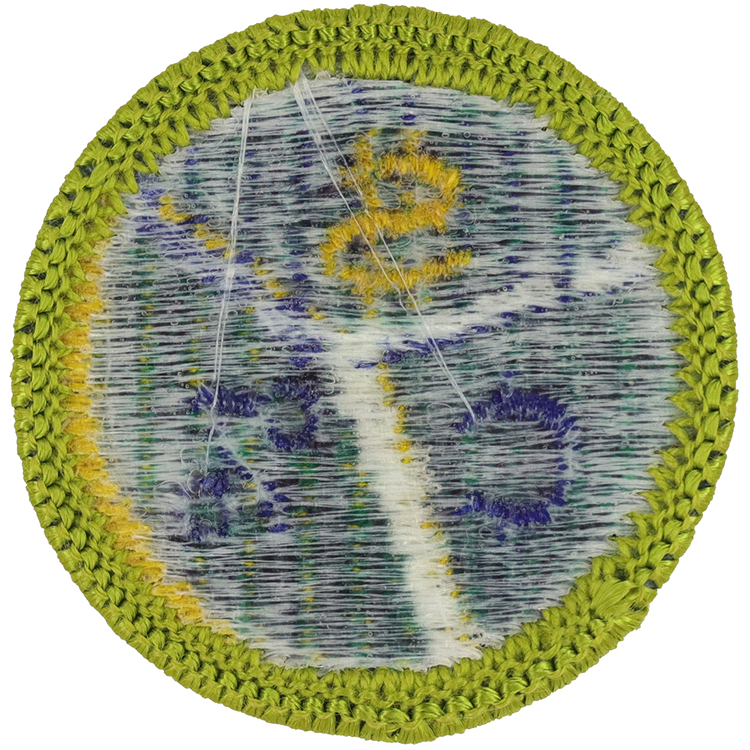
Fig. 3: PerFin-H2-mve1-reverse
- Embroidery: Cotton thread
- Border: Merrowed
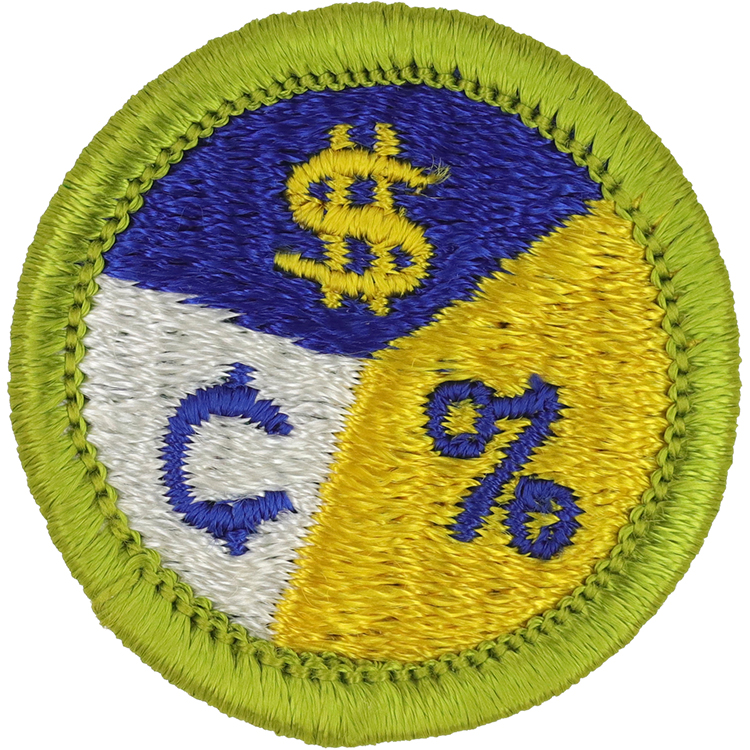
Fig. 4: PerFin-H2-mve1-front
- Back: Dark base cloth, clear plastic with waffle pattern
Item Name: Personal Finances 1972
Item ID: PerFin-H2
Collector Rating: 1
Pamphlets Used to Earn this Badge
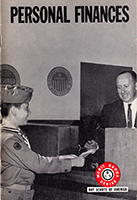
Requirements September 1962 until June 1972
1. Over a 3-month period, keep a record of the money you receive such as an allowance, gifts, earnings, fees, and interest. During the same period, keep a daily record of what you do with the money. Show your counselor how much of this money was used to support your church or synagogue and other organizations that build a better community. Explain why some of the money you earn should be set aside and shared for such purposes.
2. Estimate how much money you expect to receive during the next 12 months. Prepare a budget that shows what you plan to do with the money. Explain to your counselor:
(a) In what ways your experience with Requirement 1 helped you make your budget.
(b) In what ways, if any, you plan to use your income differently than you did during the 3 months of Requirement 1.
3. Explain to your counselor what plans you have, if any, for saving money over a long period of time_-for instance, for college, buying a car, taking a trip (to summer camp or a jamboree), or just putting money away for a "rainy day."
4. For each of the examples of using money listed below, be prepared to explain to the counselor the possible risk involved to the owner of the money and how other people might benefit, if at all, from the use being made of the money by:
(a) Burying it in a can.
(b) Putting it in a savings account at a bank or a savings institution.
(c) Opening a checking account at a bank.
(d) Buying United States savings bonds.
(e) Starting a small company that makes and sells handicraft items such as beaded belts, tooled wallets, copper bracelets, fishing flies, etc.
(f) Buying a common stock in one of the well-known established companies.
(g) Purchasing a house by cash or by down payment and a mortgage.
(h) Buying life insurance.
(i) Buying a bond issued by a large corporation.
5. If you were to buy a bicycle or radio, you have a choice of:
(a) Saving money until you have enough to pay cash for the item.
(b) Paying for the item in monthly or weekly installments.
Explain to your counselor the advantages and disadvantages of paying cash or buying on installments.