-
Merit Badges
- Legend to identify Merit Badges
- 1910 British Merit Badges
- Square 1911 - 33
- Wide Crimped 1934 & 35
-
Narrow Tan Crimped 1936 - 42
- Tan Heavyweight Cloth with Silk Embroidery and Printed Back 1936 - 37
- Tan Heavyweight Cloth with Silk Embroidery and Plain Back 1937 - 38
- Tan Lightweight Cloth with Silk Embroidery and Plain Back 1938 - 39
- Tan Lightweight Cloth with Cotton Continuous Loop Embroidery and Plain Back 1939 - 42
- Tan Lightweight Cloth with Cotton Lockstitch Embroidery and Plain Back 1939 - 42
- Blue Background 1942 - 46
- Wartime 1942 - 46
- Khaki Narrow Crimped 1946 - 59
- Green Twill Gauze Back 1960 - 68
- Fully Embroidered Merrowed Edge 1960 - 72
- Unprinted Plastic Back 1972 - 01
- Printed Plastic Back 2002 - Current
-
Merit Badge Paper
- Merit Badge Applications
- Merit Badge Cards
-
Merit Badge Pamphlets
- Type 1 White Cover - Rectangle Drawing On Cover
- Type 2 White Cover 5-375" x 8" Title at Top
- Type 3A Tan Cover - 200 Fifth Avenue
- Type 3B Tan Cover - 2 line address New York City
- Type 3C Tan Cover - 2 line address New York N.Y.
- Type 3D Tan Cover - 1 line address New York N.Y.
- Type 4 Standing Scout Cover
- Type 5A War Cover
- Type 5B Red and White
- Type 6 Photo-Red Cover
- Type 7 Full Photo Cover or Bulls-eye Cover
- Type 8 Full Photo - Green Stripe Cover
- Type 9 Full Photo - Red Stripe Cover
- Type 10A Blue Stripe - Logo above bottom blue stripe - FDL centered
- Type 10B - Blue Stripe in bottom of photo area. FDL to left of text
- Special Covers
- Boy Craft Helps
- Merit Badge Counselor's Guides
-
Youth Position
- Junior Assistant Scoutmaster
- Senior Patrol Leader
- Assistant Senior Patrol Leader
- Patrol Leader
- Assistant Patrol Leader
- Troop Guide
- Scribe
- Quartermaster
- Instructor
- Chaplain Aide
- Den Chief
- Librarian
- Musician
- Webmaster
- Bugler
- Troop Historian
- Troop Representative
- Unit Representative
- Leadership Corps
- Honor Guard
- Leave No Trace Trainer
- Outdoor Ethics Guide
-
Patrol Medallions
- Patrol Medallions Introduction
- Legend to identify Patrol Medallions
- Patrol Shoulder Knot-Ribbons
- Felt Handmade Patrol Medallions
- Square Felt Patrol Medallions
- Round Broadcloth Patrol Medallions
- Red Twill Patrol Medallions
- Multi-Color Cloth Patrol Medallions
- Tan Cloth Patrol Medallions
- Patrol Medallion Back Patches
- Woodbadge Patrol Medallion
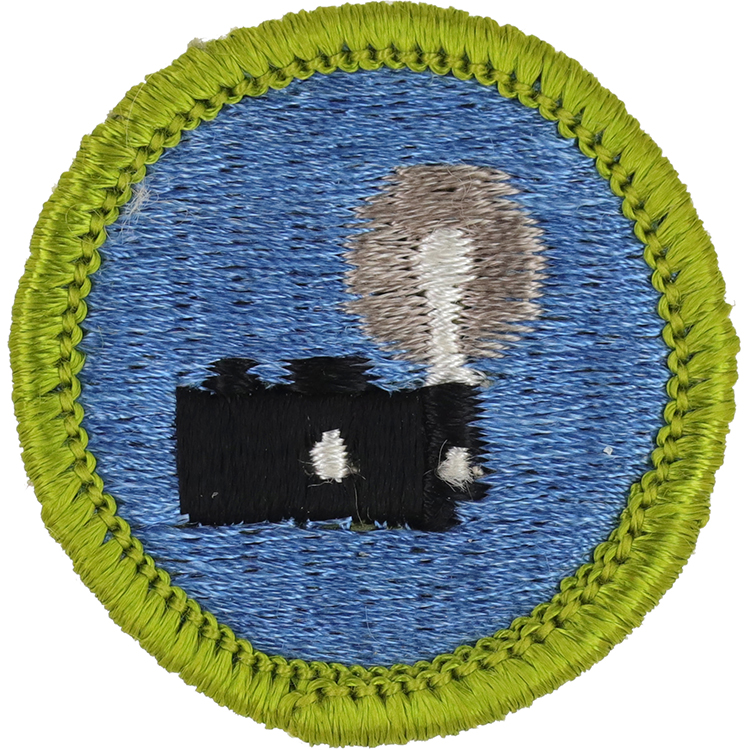
Fig. 1: Photog-G-Front
- Embroidery: Cotton thread
- Border: Merrowed
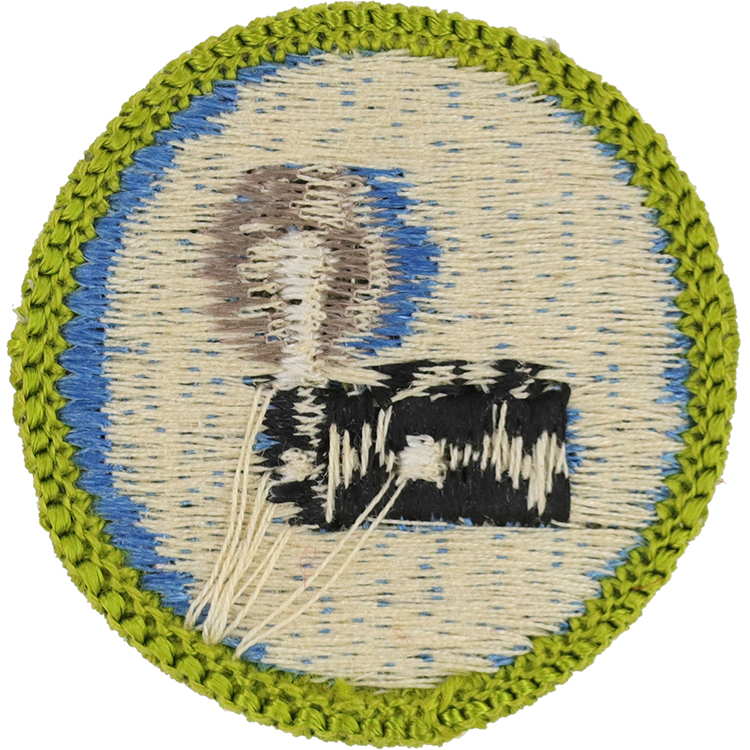
Fig. 2: Photog-G-Reverse
- Back: Starched cloth
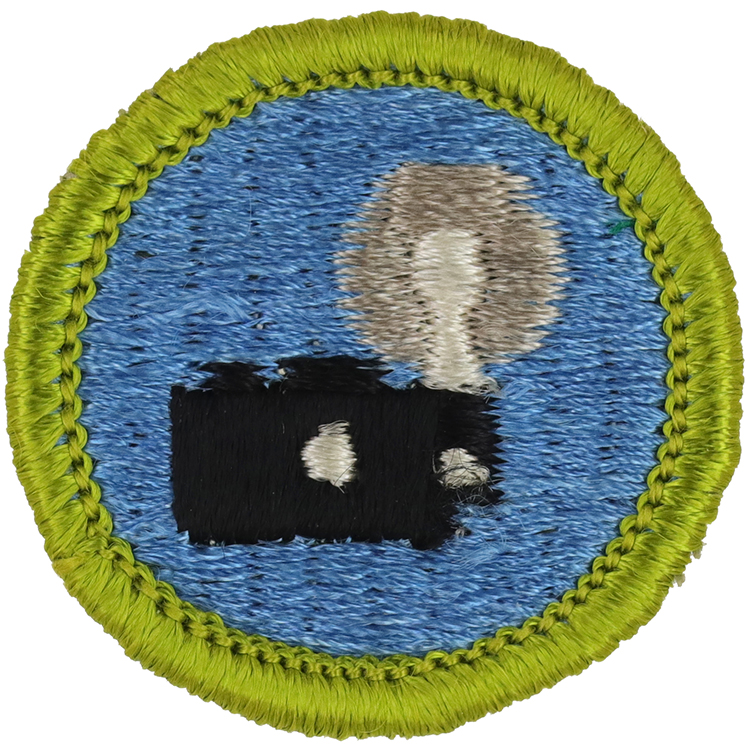
Fig. 3: Photog-G-mve1-front
- Embroidery: Cotton thread
- Border: Merrowed
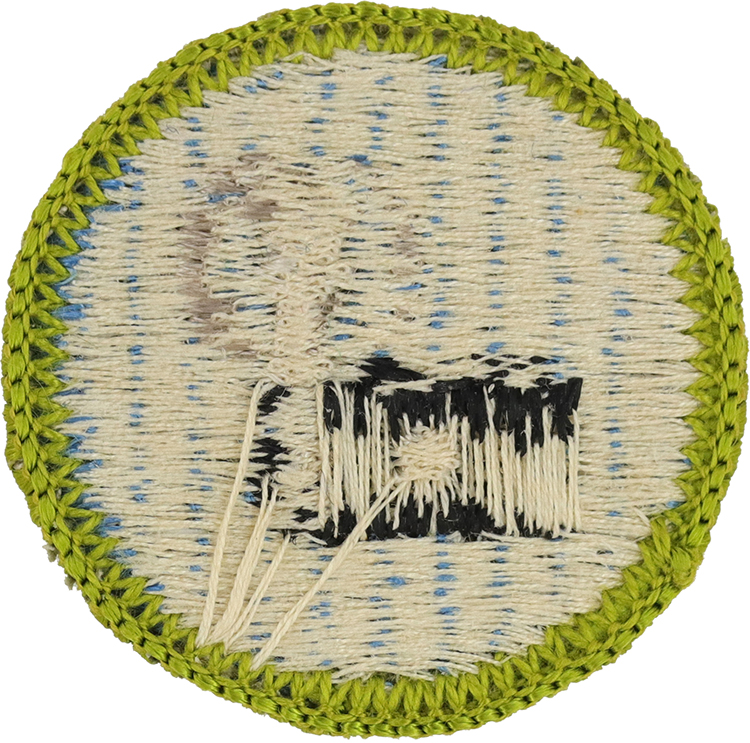
Fig. 4: Photog-G-mve1-reverse
- Back: Gauze reinforced starched cloth
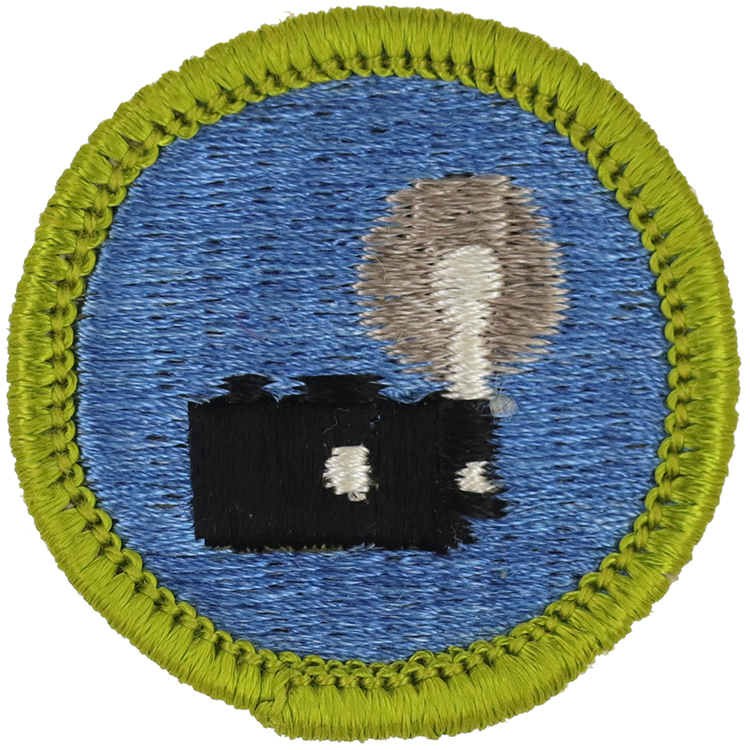
Fig. 5: Photog-G-mve2-front
- Minor variation: Camera and flash ring size differences
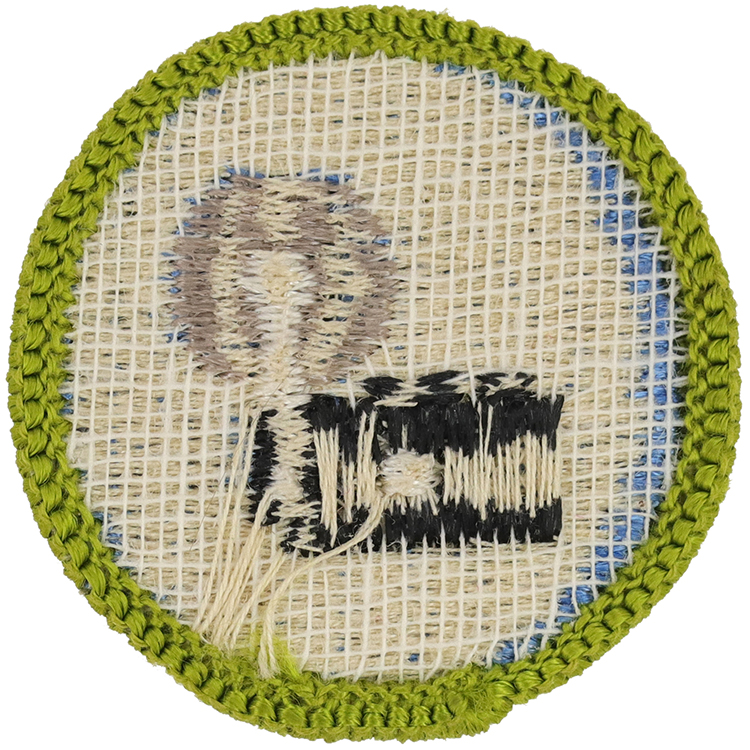
Fig. 6: Photog-G-mve2-reverse
- Back: Starched cloth
Item Name: Photography 1961 - 1972
Item ID: Photog-G
Collector Rating: 1
Pamphlets Used to Earn this Badge
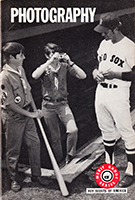
Requirements January 1960 until June 1972
1. Tell some of the ways that photography serves in the home, in science, in education, in business, and in industry. Discuss with your counselor photographic careers in various fields.
2. Explain how your camera works, how an image gets on film, and why you get a negative when you expose and develop regular black-and-white film.
3. Explain the relationship of F stop, shutter speed, film speed, and light conditions. Demonstrate how to determine F stop and shutter speed with film exposure guide or light meter.
4. Do either a or b:
a. Still Pictures
1) Tell what makes a good picture, such as choice of subject and background including composition, lighting, and focus; and demonstrate your understanding of these in pictures submitted in the next requirement.
2) Shoot according to a plan a series of at least twelve pictures, either black-and-white prints or color slides, that tell a story. Plan should include the story, directions that a photographer might follow for shooting each picture, storytelling, titles, and a list of equipment needed. Tell your counselor the type of film you used and why you picked it. Have film developed and prints or transparencies (slides) made. Where prints are used: Mount the prints in an album on successive pages with story and picture titles nearby. Display them at a troop meeting. Also display either one film you have developed yourself, or prints you have made from at least six different negatives. Tell how you did it. Or where slides are used: Show the slides properly to an accepted audience, other than family, while telling the story. Explain to your counselor the proper way to present a slide show, including such items as type and size of screen, how to arrange and prepare the audience, safety, and proper care and use of equipment.
b. Motion Pictures
1) Tell what makes a good motion picture including such items as the story, the kinds of shots and use of different lenses, and demonstrate your understanding of these in the film submitted for the next requirement.
2) Shoot, according to a plan, a short motion picture (at least 100 feet of 16 mm.; or 50 feet of 8 mm.) that tells a story. Plan should include the story, directions that a photographer might follow for shooting each scene, titles, narration, and a list of equipment needed. Tell your counselor the type of film you used and why you picked it.
3) Edit the movie and present it properly to an accepted audience, other than family, while telling the story.
4) Explain to your counselor the proper way to present a motion picture, including such items as type and size of screen, how to arrange and prepare the audience, safety, and proper care and use of projector.