-
Merit Badges
- Legend to identify Merit Badges
- 1910 British Merit Badges
- Square 1911 - 33
- Wide Crimped 1934 & 35
-
Narrow Tan Crimped 1936 - 42
- Tan Heavyweight Cloth with Silk Embroidery and Printed Back 1936 - 37
- Tan Heavyweight Cloth with Silk Embroidery and Plain Back 1937 - 38
- Tan Lightweight Cloth with Silk Embroidery and Plain Back 1938 - 39
- Tan Lightweight Cloth with Cotton Continuous Loop Embroidery and Plain Back 1939 - 42
- Tan Lightweight Cloth with Cotton Lockstitch Embroidery and Plain Back 1939 - 42
- Blue Background 1942 - 46
- Wartime 1942 - 46
- Khaki Narrow Crimped 1946 - 59
- Green Twill Gauze Back 1960 - 68
- Fully Embroidered Merrowed Edge 1960 - 72
- Unprinted Plastic Back 1972 - 01
- Printed Plastic Back 2002 - Current
-
Merit Badge Paper
- Merit Badge Applications
- Merit Badge Cards
-
Merit Badge Pamphlets
- Type 1 White Cover - Rectangle Drawing On Cover
- Type 2 White Cover 5-375" x 8" Title at Top
- Type 3A Tan Cover - 200 Fifth Avenue
- Type 3B Tan Cover - 2 line address New York City
- Type 3C Tan Cover - 2 line address New York N.Y.
- Type 3D Tan Cover - 1 line address New York N.Y.
- Type 4 Standing Scout Cover
- Type 5A War Cover
- Type 5B Red and White
- Type 6 Photo-Red Cover
- Type 7 Full Photo Cover or Bulls-eye Cover
- Type 8 Full Photo - Green Stripe Cover
- Type 9 Full Photo - Red Stripe Cover
- Type 10A Blue Stripe - Logo above bottom blue stripe - FDL centered
- Type 10B - Blue Stripe in bottom of photo area. FDL to left of text
- Special Covers
- Boy Craft Helps
- Merit Badge Counselor's Guides
-
Youth Position
- Junior Assistant Scoutmaster
- Senior Patrol Leader
- Assistant Senior Patrol Leader
- Patrol Leader
- Assistant Patrol Leader
- Troop Guide
- Scribe
- Quartermaster
- Instructor
- Chaplain Aide
- Den Chief
- Librarian
- Musician
- Webmaster
- Bugler
- Troop Historian
- Troop Representative
- Unit Representative
- Leadership Corps
- Honor Guard
- Leave No Trace Trainer
- Outdoor Ethics Guide
-
Patrol Medallions
- Patrol Medallions Introduction
- Legend to identify Patrol Medallions
- Patrol Shoulder Knot-Ribbons
- Felt Handmade Patrol Medallions
- Square Felt Patrol Medallions
- Round Broadcloth Patrol Medallions
- Red Twill Patrol Medallions
- Multi-Color Cloth Patrol Medallions
- Tan Cloth Patrol Medallions
- Patrol Medallion Back Patches
- Woodbadge Patrol Medallion
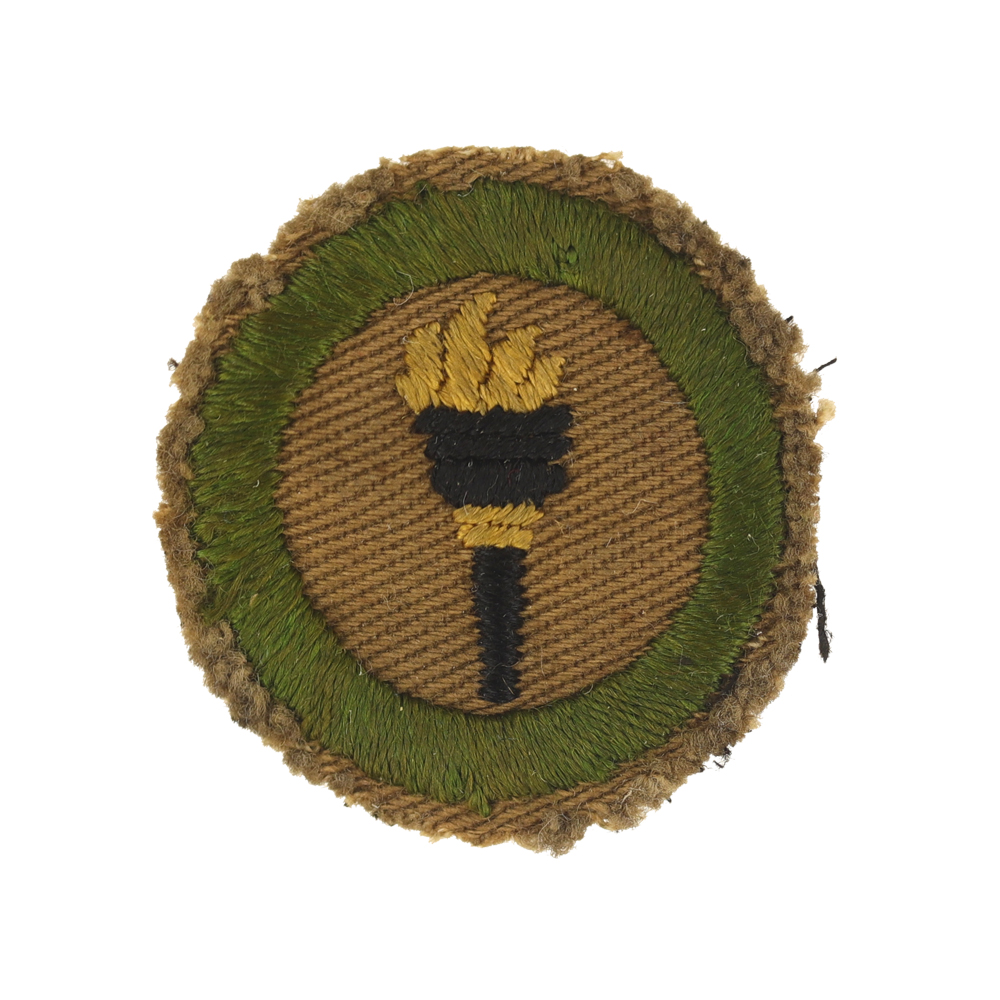
Fig. 1: PubLic-1911-Front
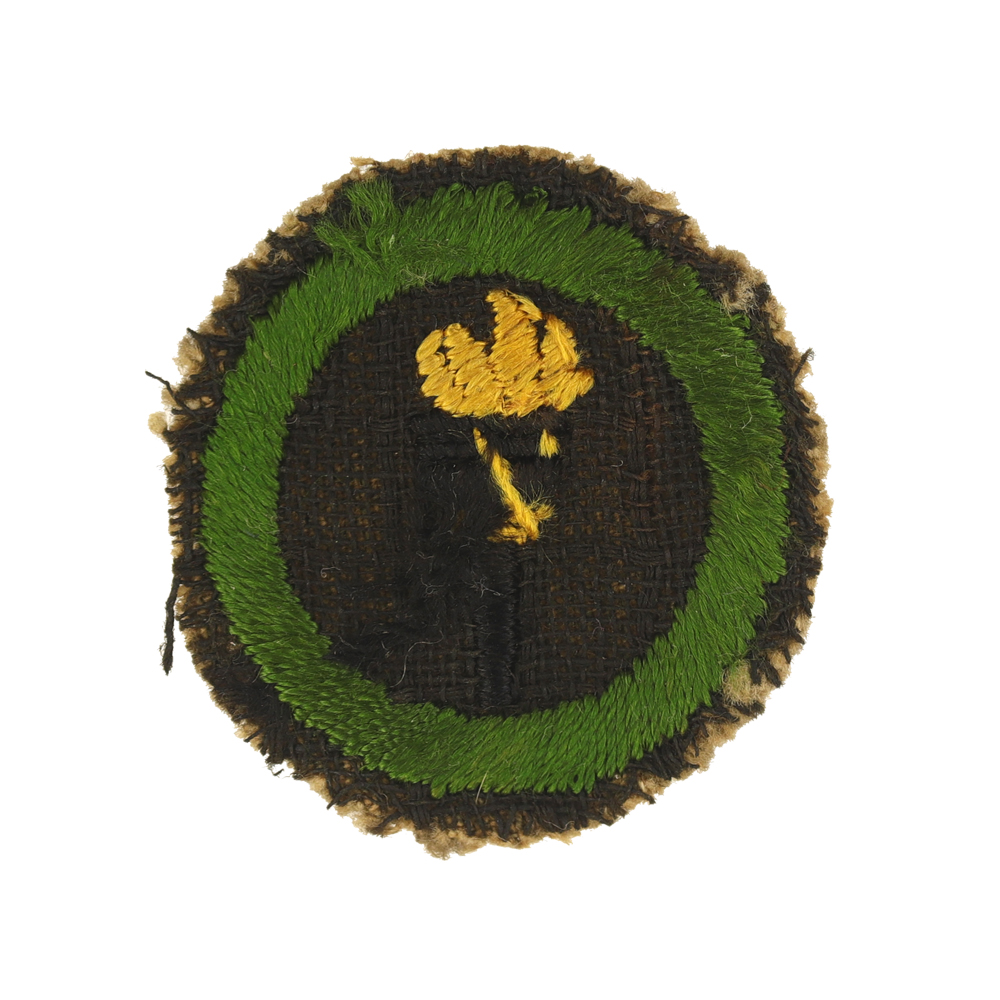
Fig. 2: PubLic-1911-Reverse
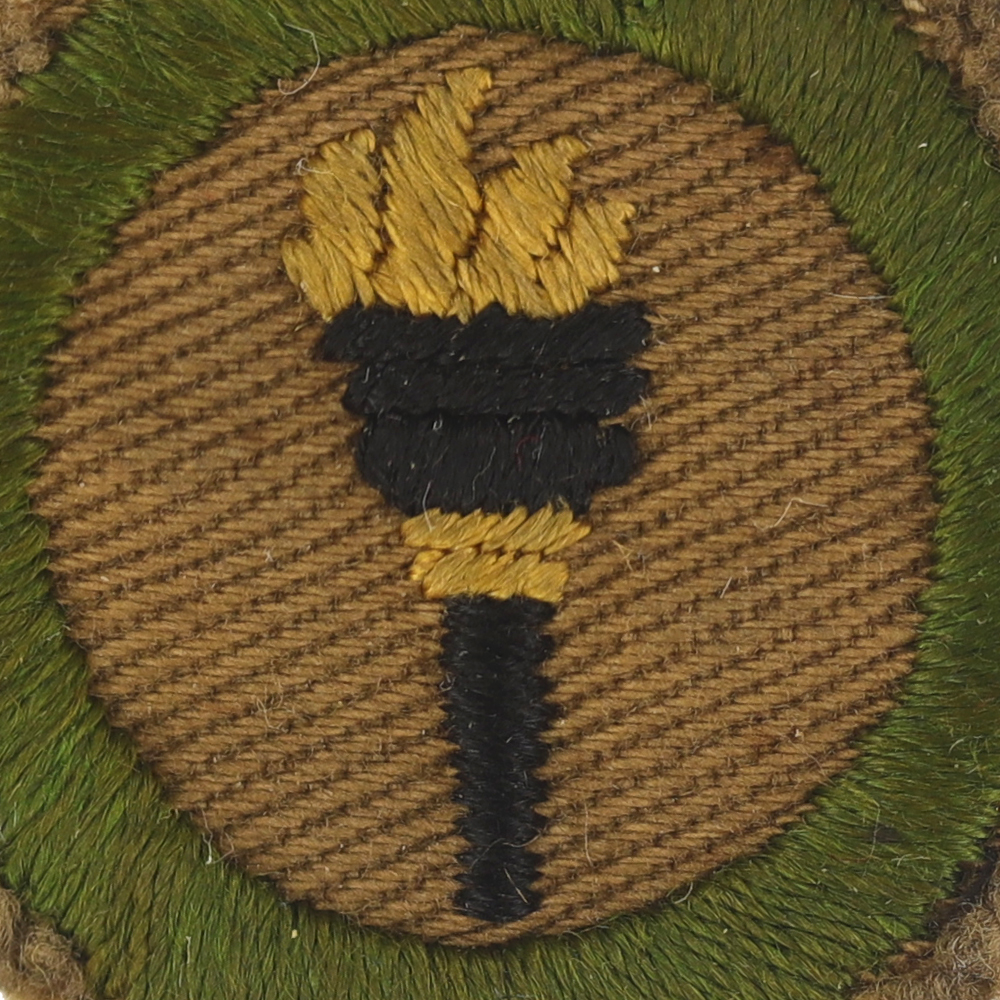
Fig. 3: PubLic-1911-Magnified
Item Name: Public Health 1911
Item ID: PubLic-1911
Collector Rating: 10
Additional Info:
Earned By: Richard Burckes, Waltham, Mass.; George Hesse, Utica, N. Y.; Charles Councell, Marion, Ind.; J. R. McGaw, Columbus, Ohio.; Earl Marx, 1654 Main St. Jacksonville, Fla.; Harris Berlack, 218 W. Ashley St., Jacksonville, Fla.; Robert Earl Dean, Room 583 Y. M. C. A. Bldg., Jacksonville, Fla.; Bruce K. Brown, Wilmette, 111; Kingsley L. Rice, Wilmette, 111.; Alfred Schmidt, Wilmette, 111.; William Kleinpell, Wilmette, 111.; Christian Truelson, Brooklyn, N. Y.
Requirements June 1911 until August 1911
The scout must state what the chief causes of each of the following diseases are: tuberculosis, typhoid, malaria. Draw a diagram showing how the house fly carries disease. Tell how a scout may cooperate with the board of health. Describe the method used by his city in disposing of garbage. What should be done with a house occupied by a person who has had a contagious disease? Tell how a city should protect its foods, (a) milk, (b) meat, (c) and foods for sale on streets. He must tell how to plan the sanitary care of a camp.
Requirements August 1911 until October 1914
1. State what the chief causes of each of the following disease are: tuberculosis, typhoid, malaria.
2. Draw a diagram showing how the house-fly carries disease.
3. Tell what should be done to a house which has been occupied by a person who has had a contagious disease.
4. Tell how a scout may cooperate with the board of health in preventing disease.
5. Describe the method used in his community in disposing of garbage.
6. Tell how a city should protect its foods; milk, meat, and exposed foods.
7. Tell how to plan the sanitary care of a camp.
8. State the reason why school children should undergo a medical examination.