-
Merit Badges
- Legend to identify Merit Badges
- 1910 British Merit Badges
- Square 1911 - 33
- Wide Crimped 1934 & 35
-
Narrow Tan Crimped 1936 - 42
- Tan Heavyweight Cloth with Silk Embroidery and Printed Back 1936 - 37
- Tan Heavyweight Cloth with Silk Embroidery and Plain Back 1937 - 38
- Tan Lightweight Cloth with Silk Embroidery and Plain Back 1938 - 39
- Tan Lightweight Cloth with Cotton Continuous Loop Embroidery and Plain Back 1939 - 42
- Tan Lightweight Cloth with Cotton Lockstitch Embroidery and Plain Back 1939 - 42
- Blue Background 1942 - 46
- Wartime 1942 - 46
- Khaki Narrow Crimped 1946 - 59
- Green Twill Gauze Back 1960 - 68
- Fully Embroidered Merrowed Edge 1960 - 72
- Unprinted Plastic Back 1972 - 01
- Printed Plastic Back 2002 - Current
-
Merit Badge Paper
- Merit Badge Applications
- Merit Badge Cards
-
Merit Badge Pamphlets
- Type 1 White Cover - Rectangle Drawing On Cover
- Type 2 White Cover 5-375" x 8" Title at Top
- Type 3A Tan Cover - 200 Fifth Avenue
- Type 3B Tan Cover - 2 line address New York City
- Type 3C Tan Cover - 2 line address New York N.Y.
- Type 3D Tan Cover - 1 line address New York N.Y.
- Type 4 Standing Scout Cover
- Type 5A War Cover
- Type 5B Red and White
- Type 6 Photo-Red Cover
- Type 7 Full Photo Cover or Bulls-eye Cover
- Type 8 Full Photo - Green Stripe Cover
- Type 9 Full Photo - Red Stripe Cover
- Type 10A Blue Stripe - Logo above bottom blue stripe - FDL centered
- Type 10B - Blue Stripe in bottom of photo area. FDL to left of text
- Special Covers
- Boy Craft Helps
- Merit Badge Counselor's Guides
-
Youth Position
- Junior Assistant Scoutmaster
- Senior Patrol Leader
- Assistant Senior Patrol Leader
- Patrol Leader
- Assistant Patrol Leader
- Troop Guide
- Scribe
- Quartermaster
- Instructor
- Chaplain Aide
- Den Chief
- Librarian
- Musician
- Webmaster
- Bugler
- Troop Historian
- Troop Representative
- Unit Representative
- Leadership Corps
- Honor Guard
- Leave No Trace Trainer
- Outdoor Ethics Guide
-
Patrol Medallions
- Patrol Medallions Introduction
- Legend to identify Patrol Medallions
- Patrol Shoulder Knot-Ribbons
- Felt Handmade Patrol Medallions
- Square Felt Patrol Medallions
- Round Broadcloth Patrol Medallions
- Red Twill Patrol Medallions
- Multi-Color Cloth Patrol Medallions
- Tan Cloth Patrol Medallions
- Patrol Medallion Back Patches
- Woodbadge Patrol Medallion
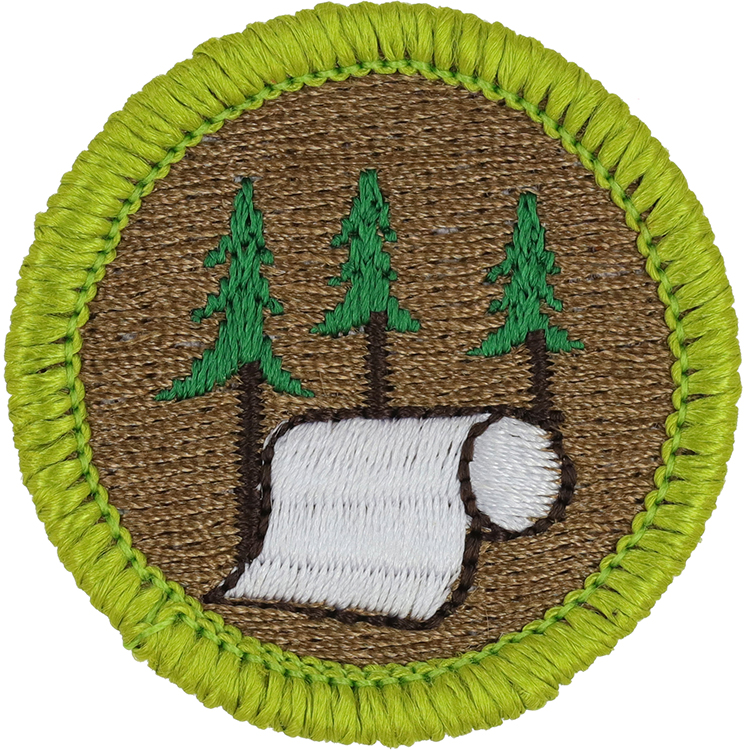
Fig. 1: PulPap-K-Front
- Embroidery: Rayon thread
- Border: Merrowed
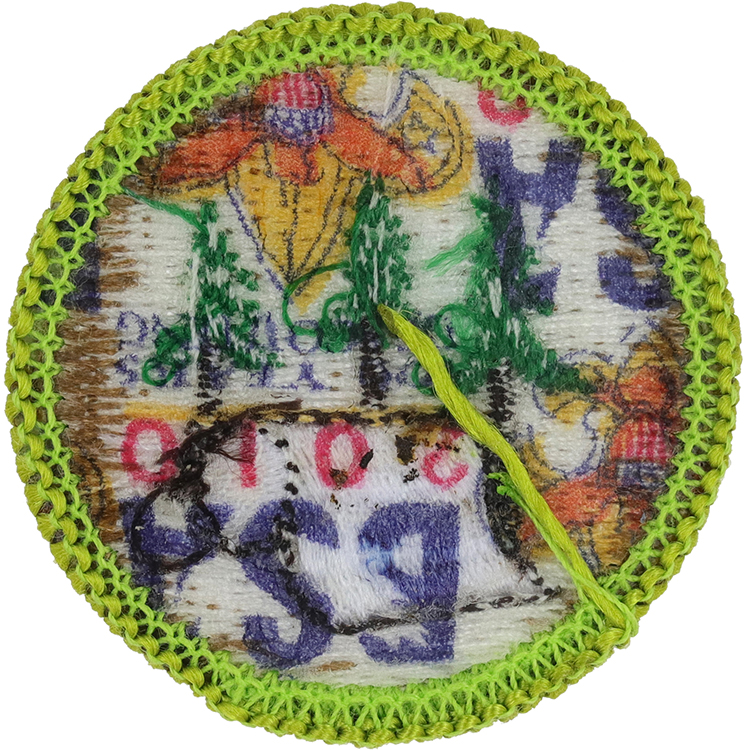
Fig. 2: PulPap-K-Reverse
- Back: 100th Anniversary imprint
Item Name: Pulp and Paper 2010 - 2013
Item ID: PulPap-K
Collector Rating: 1
Pamphlets Used to Earn this Badge

Requirements January 2006 until January 2014
1. Tell the history of papermaking. Describe the part paper products play in our society and economy.
2. List the trees that are major sources of papermaking fibers. Then discuss what other users are made of the trees and of the forestland owned by the pulp and paper industry. Describe the ways the industry plants, grows, and harvests trees. Explain how the industry manages its forests so that the supply of trees keeps pace with the demand, and tell about one way the industry has incorporated a sustainable forestry concept. Give two ways the papermaking industry has addressed pollution.
3. Describe two ways of getting fibers from wood, and explain the major differences. Tell why some pulps are bleached, and describe this process.
4. Describe how paper is made. Discuss how paper is recycled. Make a sheet of paper by hand.
5. Explain what coated paper is and why it is coated. Describe the major uses for different kinds of coated papers. Describe one other way that paper is changed by chemical or mechanical means to make new uses possible.
6. Make a list of 15 pulp or paper products found in your home. Share examples of 10 such products with your counselor.
7. With your parent’s and counselor’s approval, do ONE of the following:
- Visit a pulp mill. Describe how the mill converts wood to cellulose fibers.
- Visit a paper mill and get a sample of the paper made there. Describe the processes used for making this paper. Tell how it will be used.
- Visit a container plant or box plant. Describe how the plant’s products are made.
- Visit a recycled paper collection or sorting facility. Describe the operations there.
- Using books, magazines, your local library, the Internet (with your parents’ permission), and any other suitable research tool, find out how paper products are developed. Find out what role research and development play in the papermaking industry. Share what you learn with your counselor.
8. Find out about three career opportunities in the papermaking industry that interest you. Pick one and find out the education, training, and experience required for this profession. Discuss this with your counselor, and explain why this profession might interest you.