-
Merit Badges
- Legend to identify Merit Badges
- 1910 British Merit Badges
- Square 1911 - 33
- Wide Crimped 1934 & 35
-
Narrow Tan Crimped 1936 - 42
- Tan Heavyweight Cloth with Silk Embroidery and Printed Back 1936 - 37
- Tan Heavyweight Cloth with Silk Embroidery and Plain Back 1937 - 38
- Tan Lightweight Cloth with Silk Embroidery and Plain Back 1938 - 39
- Tan Lightweight Cloth with Cotton Continuous Loop Embroidery and Plain Back 1939 - 42
- Tan Lightweight Cloth with Cotton Lockstitch Embroidery and Plain Back 1939 - 42
- Blue Background 1942 - 46
- Wartime 1942 - 46
- Khaki Narrow Crimped 1946 - 59
- Green Twill Gauze Back 1960 - 68
- Fully Embroidered Merrowed Edge 1960 - 72
- Unprinted Plastic Back 1972 - 01
- Printed Plastic Back 2002 - Current
-
Merit Badge Paper
- Merit Badge Applications
- Merit Badge Cards
-
Merit Badge Pamphlets
- Type 1 White Cover - Rectangle Drawing On Cover
- Type 2 White Cover 5-375" x 8" Title at Top
- Type 3A Tan Cover - 200 Fifth Avenue
- Type 3B Tan Cover - 2 line address New York City
- Type 3C Tan Cover - 2 line address New York N.Y.
- Type 3D Tan Cover - 1 line address New York N.Y.
- Type 4 Standing Scout Cover
- Type 5A War Cover
- Type 5B Red and White
- Type 6 Photo-Red Cover
- Type 7 Full Photo Cover or Bulls-eye Cover
- Type 8 Full Photo - Green Stripe Cover
- Type 9 Full Photo - Red Stripe Cover
- Type 10A Blue Stripe - Logo above bottom blue stripe - FDL centered
- Type 10B - Blue Stripe in bottom of photo area. FDL to left of text
- Special Covers
- Boy Craft Helps
- Merit Badge Counselor's Guides
-
Youth Position
- Junior Assistant Scoutmaster
- Senior Patrol Leader
- Assistant Senior Patrol Leader
- Patrol Leader
- Assistant Patrol Leader
- Troop Guide
- Scribe
- Quartermaster
- Instructor
- Chaplain Aide
- Den Chief
- Librarian
- Musician
- Webmaster
- Bugler
- Troop Historian
- Troop Representative
- Unit Representative
- Leadership Corps
- Honor Guard
- Leave No Trace Trainer
- Outdoor Ethics Guide
-
Patrol Medallions
- Patrol Medallions Introduction
- Legend to identify Patrol Medallions
- Patrol Shoulder Knot-Ribbons
- Felt Handmade Patrol Medallions
- Square Felt Patrol Medallions
- Round Broadcloth Patrol Medallions
- Red Twill Patrol Medallions
- Multi-Color Cloth Patrol Medallions
- Tan Cloth Patrol Medallions
- Patrol Medallion Back Patches
- Woodbadge Patrol Medallion
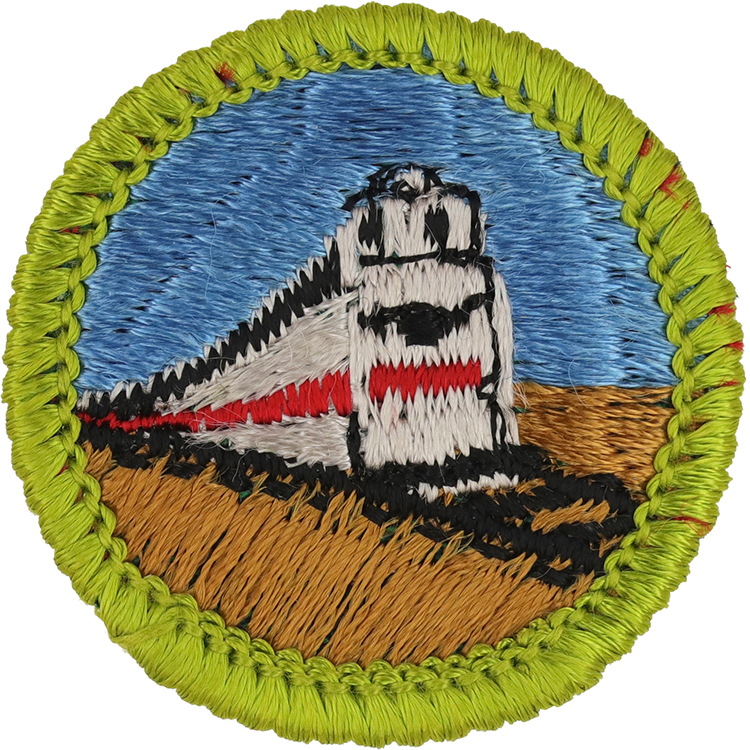
Fig. 1: Railro-H2-Front
- Embroidery: Cotton thread
- Border: Merrowed
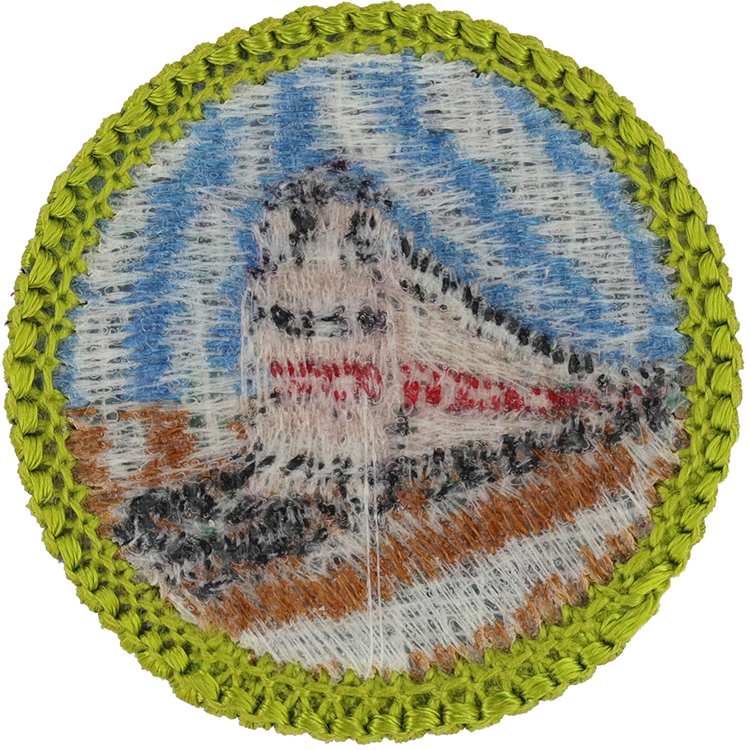
Fig. 2: Railro-H2-Reverse
- Back: Clear plastic with waffle pattern
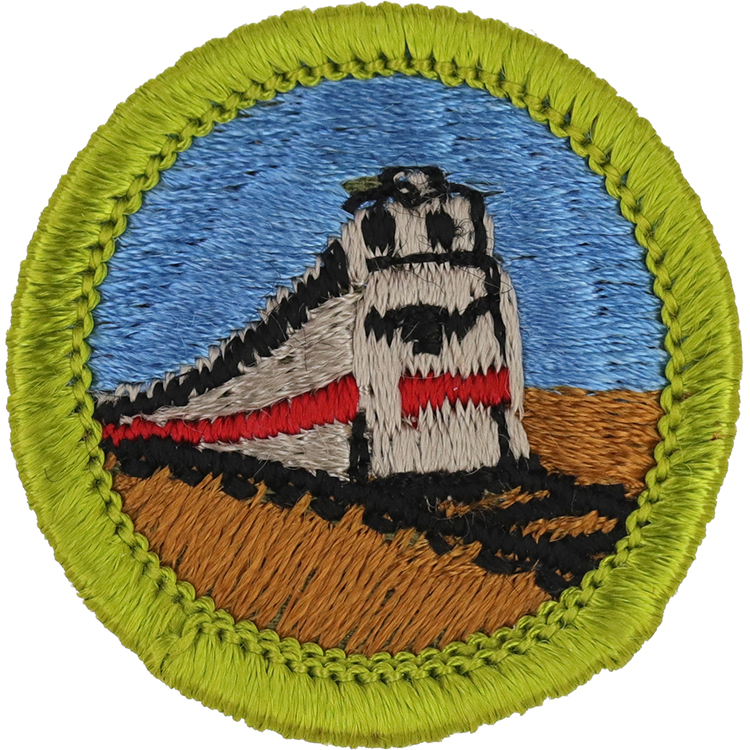
Fig. 3: Railro-H2-mve1-front
- Embroidery: Cotton thread
- Border: Merrowed
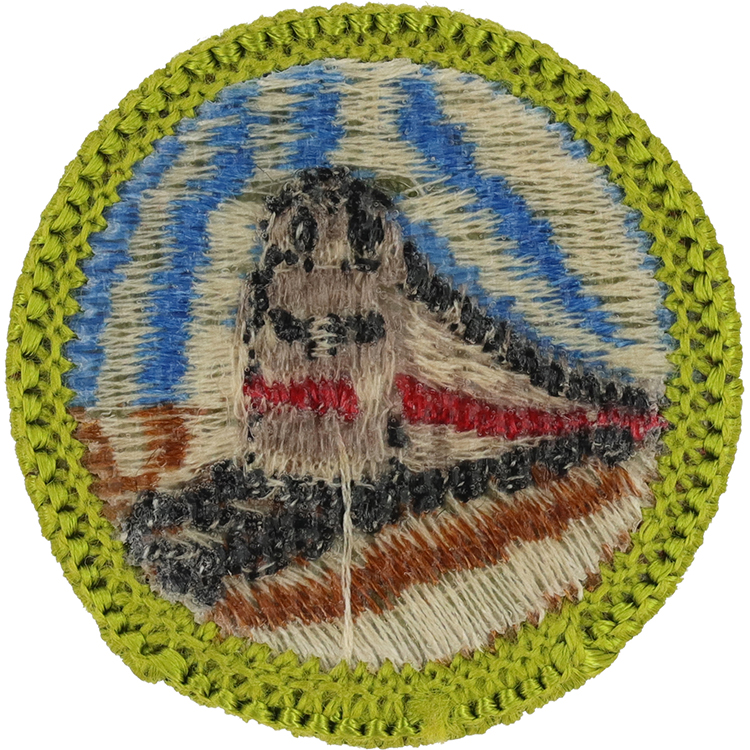
Fig. 4: Railro-H2-mve1-reverse
- Back: Dark base cloth, clear plastic with waffle pattern
Item Name: Railroading 1972 - 1975
Item ID: Railro-H2
Collector Rating: 1
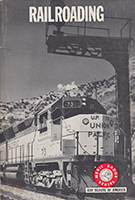
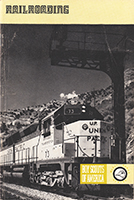
Pamphlets Used to Earn this Badge
Requirements June 1972 until January 1975
1. Do TWO of the following:
(a) Know the name, scale, and track gauge for four model railroad gauges. Show the right way to clean and oil model train equipment.
(b) Draw to scale, the layout of your own model railroad; or one that could be built in your home. Have a point-to-point or loop road with different routings. Include a turnaround, a terminal, a yard, and a siding.
(c) Alone or with others, build a model railroad layout. Lay track with ties, ballast, and scenery. Make connections from power supply to track and accessories.
(d) Make a scale model of a locomotive (with or without power), or make two cars. (Kits may be used.)
(e) Draw scale plans and build two accessories.
2. Do the following:
(a) Explain how real electric and diesel locomotives develop power.
(b) Identify by model or picture six different kinds of railroad power.
(c) Show arm or lantern signals by trainmen. Pick one kind of semaphore or light signal system. Tell what its different signals mean. Explain the meaning of five whistle signals. Describe an emergency way to signal a train to stop.
3. Do ONE of the following:
(a) Name four departments of a railroad company. Describe what each does.
(b) Name and explain 10 jobs in railroading. Tell which job interests you most. Tell why.
4. Explain six rules of safety to use aboard trains; on platforms; at crossings; and around bridges, yards, and tunnels.
5. Do the following:
(a) Make a written plan for a trip by rail to a city 500 miles from your home. Get train information from the railroad you pick. List time you leave and arrive, the number of the train, and the kind of service you want.
(b) Name the railroads that serve your town. Explain how to arrange for the shipment of a carload of freight to a city 500 miles from your home.
6. Do ONE of the following:
(a) Plan and take a rail trip of at least 25 miles. Buy your own ticket. Read the timetables and footnotes correctly.
(b) Identify 10 different railroads by the symbols on freight cars.
7. Outline the major steps in the growth of railroads in the United States. Discuss the importance of the railroads to daily life.
Requirements January 1975 until May 1990
1. Do TWO of the following:
(a) Know the name, scale, and track gauge for four model railroad gauges. Show the right way to clean and oil model train equipment.
(b) Draw to scale the layout of your own model railroad; or one that could be built in your home. Have a point-to-point or loop road with different routings. Include a turnaround, a terminal, a yard, and a siding.
(c) Alone or with others, build a model railroad layout. Lay track with ties, ballast, and scenery. Make connections from power supply to track and accesories.
(d) Make a scale model of a locomotive (with or without power) or make two cars. (Kits may be used.)
(e) Draw scale plans and build two accessories.
2. Do the following:
(a) Explain how real electric and diesel locomotives develop power.
(b) Identify by model or picture six different kinds of railroad cars used to carry people or products.
(c) Show arm or lantern signals used by trainmen. Pick one kind of semaphore or light signal system. Tell what its different signals mean. Explain the meaning of five whistle signals. Describe an emergency way to signal a train to stop.
3. Do ONE of the following:
(a) Name four departments of a railroad company. Describe what each does.
(b) Name and explain 10 jobs in railroading. Tell which job interests you most. Tell why.
4. Explain six rules of safety to use aboard trains; on platforms; at crossings; and around bridges, yards, and tunnels.
5. Do the following:
(a) Make a written plan for a trip by rail to a city 500 miles from your home. Get a train schedule. List time you leave and arrive, the number of the train, and the service you want.
(b) Name the railroads that serve your town. Explain how to arrange for the shipment of a carload of freight to a city 500 miles from your home.
6. Do ONE of the following:
(a) Plan and take a rail trip of at least 25 miles. Buy your own ticket. Read the timetables and footnotes correctly.
(b) Identify 10 different railroads by the symbols on freight cars.
7. Outline the major steps in the growth of railroads in the United States. Discuss the importance of the railroads to daily life.