-
Merit Badges
- Legend to identify Merit Badges
- 1910 British Merit Badges
- Square 1911 - 33
- Wide Crimped 1934 & 35
-
Narrow Tan Crimped 1936 - 42
- Tan Heavyweight Cloth with Silk Embroidery and Printed Back 1936 - 37
- Tan Heavyweight Cloth with Silk Embroidery and Plain Back 1937 - 38
- Tan Lightweight Cloth with Silk Embroidery and Plain Back 1938 - 39
- Tan Lightweight Cloth with Cotton Continuous Loop Embroidery and Plain Back 1939 - 42
- Tan Lightweight Cloth with Cotton Lockstitch Embroidery and Plain Back 1939 - 42
- Blue Background 1942 - 46
- Wartime 1942 - 46
- Khaki Narrow Crimped 1946 - 59
- Green Twill Gauze Back 1960 - 68
- Fully Embroidered Merrowed Edge 1960 - 72
- Unprinted Plastic Back 1972 - 01
- Printed Plastic Back 2002 - Current
-
Merit Badge Paper
- Merit Badge Applications
- Merit Badge Cards
-
Merit Badge Pamphlets
- Type 1 White Cover - Rectangle Drawing On Cover
- Type 2 White Cover 5-375" x 8" Title at Top
- Type 3A Tan Cover - 200 Fifth Avenue
- Type 3B Tan Cover - 2 line address New York City
- Type 3C Tan Cover - 2 line address New York N.Y.
- Type 3D Tan Cover - 1 line address New York N.Y.
- Type 4 Standing Scout Cover
- Type 5A War Cover
- Type 5B Red and White
- Type 6 Photo-Red Cover
- Type 7 Full Photo Cover or Bulls-eye Cover
- Type 8 Full Photo - Green Stripe Cover
- Type 9 Full Photo - Red Stripe Cover
- Type 10A Blue Stripe - Logo above bottom blue stripe - FDL centered
- Type 10B - Blue Stripe in bottom of photo area. FDL to left of text
- Special Covers
- Boy Craft Helps
- Merit Badge Counselor's Guides
-
Youth Position
- Junior Assistant Scoutmaster
- Senior Patrol Leader
- Assistant Senior Patrol Leader
- Patrol Leader
- Assistant Patrol Leader
- Troop Guide
- Scribe
- Quartermaster
- Instructor
- Chaplain Aide
- Den Chief
- Librarian
- Musician
- Webmaster
- Bugler
- Troop Historian
- Troop Representative
- Unit Representative
- Leadership Corps
- Honor Guard
- Leave No Trace Trainer
- Outdoor Ethics Guide
-
Patrol Medallions
- Patrol Medallions Introduction
- Legend to identify Patrol Medallions
- Patrol Shoulder Knot-Ribbons
- Felt Handmade Patrol Medallions
- Square Felt Patrol Medallions
- Round Broadcloth Patrol Medallions
- Red Twill Patrol Medallions
- Multi-Color Cloth Patrol Medallions
- Tan Cloth Patrol Medallions
- Patrol Medallion Back Patches
- Woodbadge Patrol Medallion
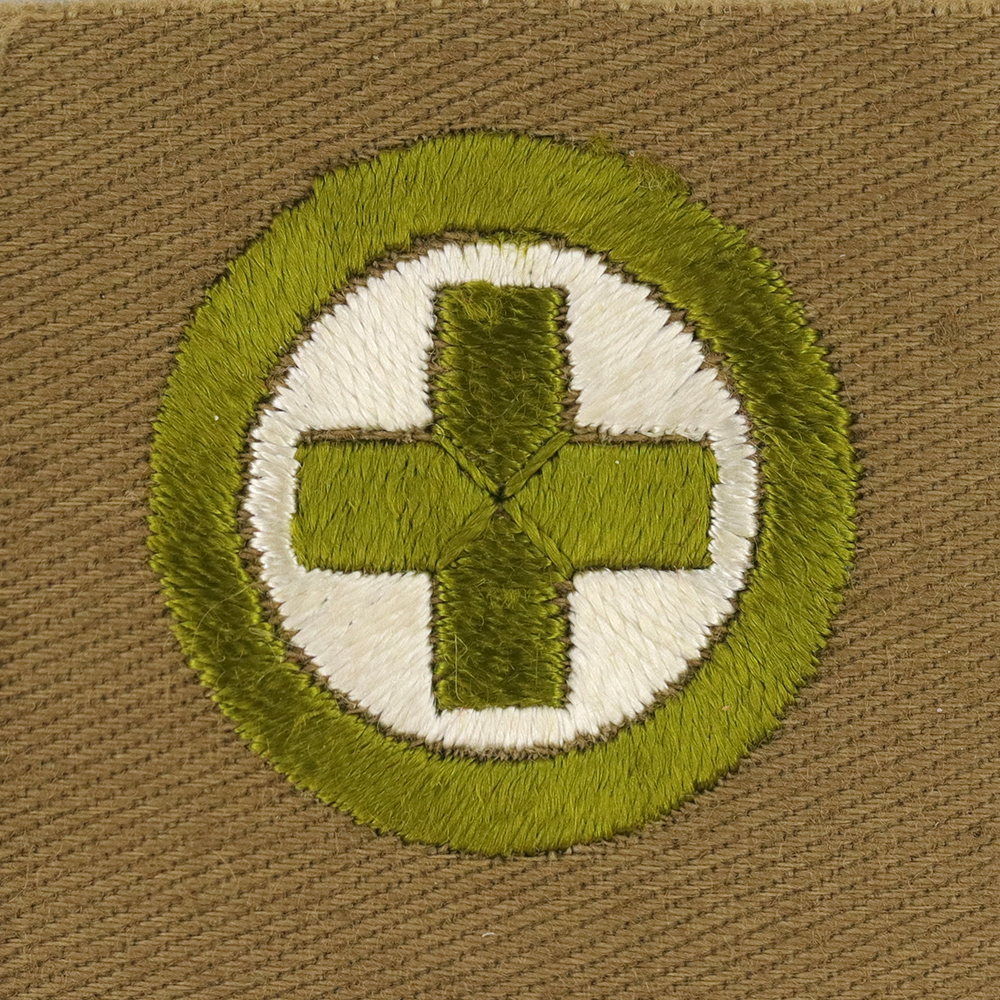
Fig. 1: SafFir-AT1-Front
- Cloth: Heavyweight tan right twill
- Embroidery: Silk continuous
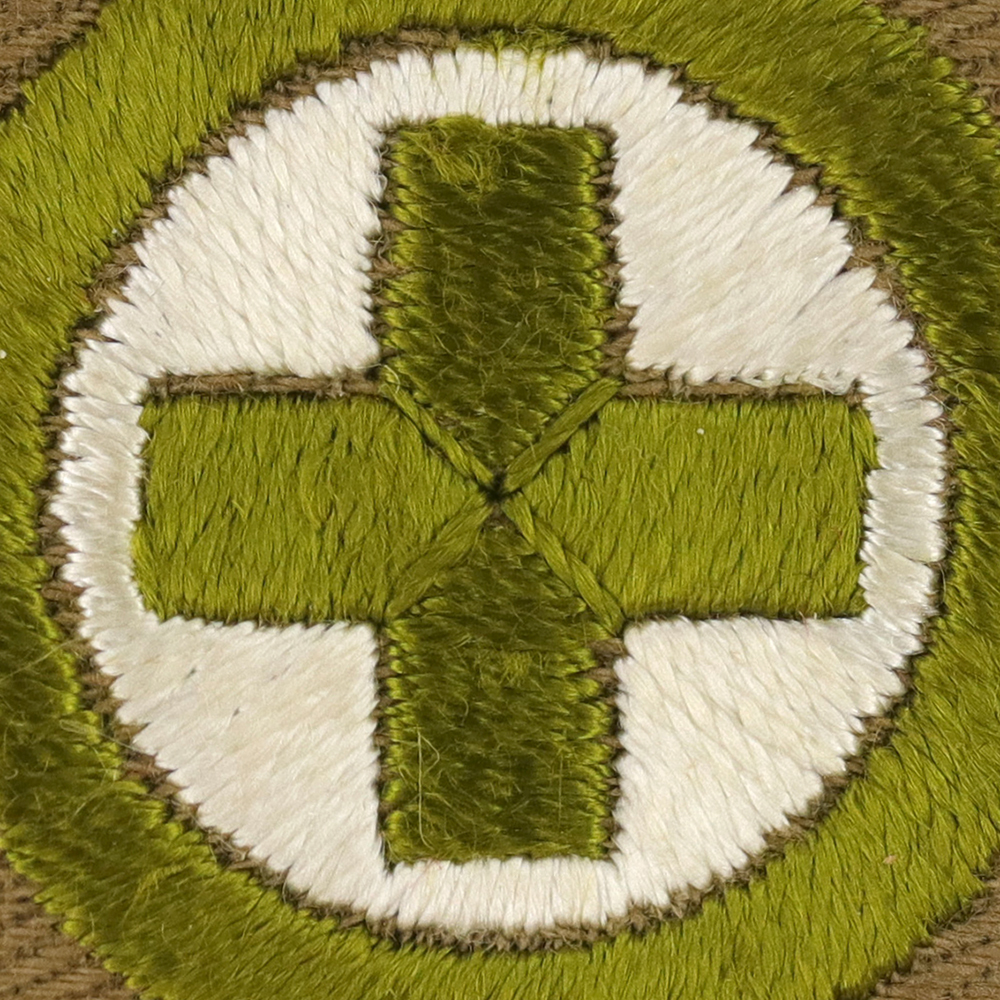
Fig. 2: SafFir-AT1-Magnified
- Design: Clockwise border, small green cross without cross stitches in middle of cross, white background is horizontal embroidery
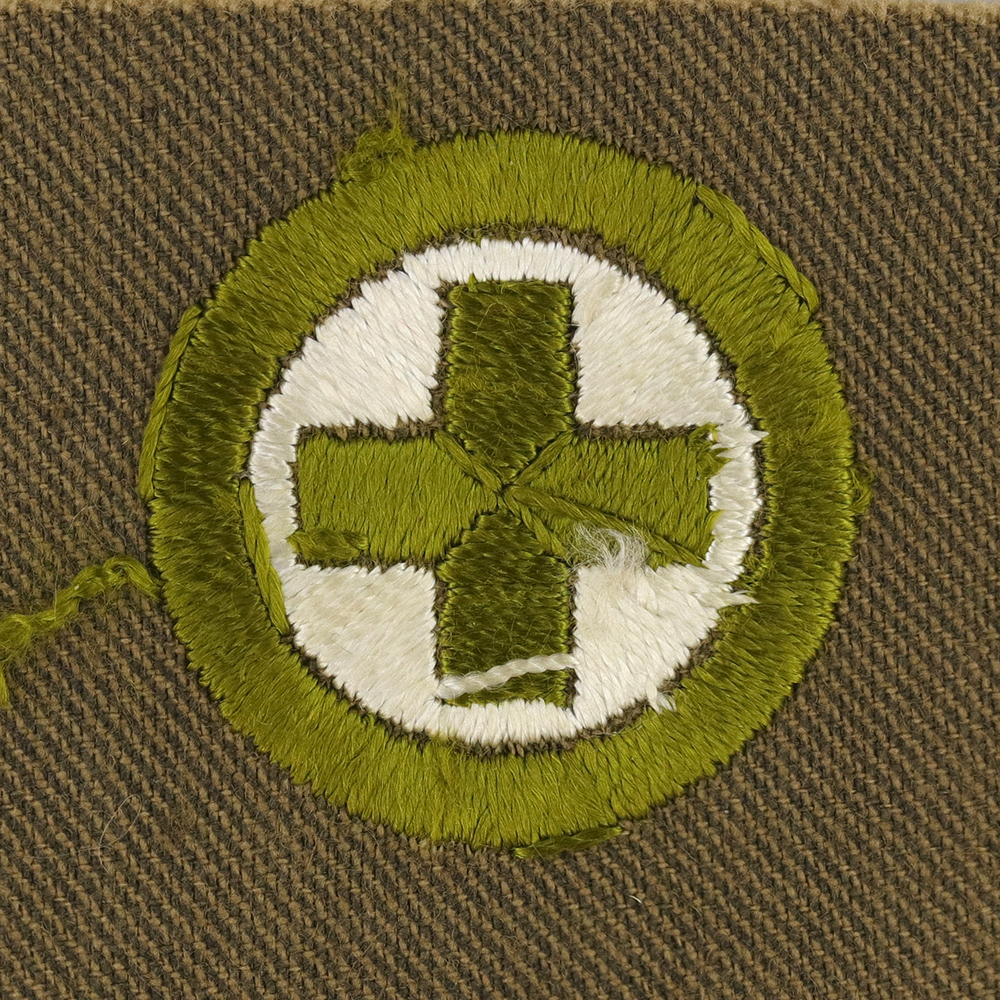
Fig. 3: SafFir-AT1-Reverse
- Back: Black imprint
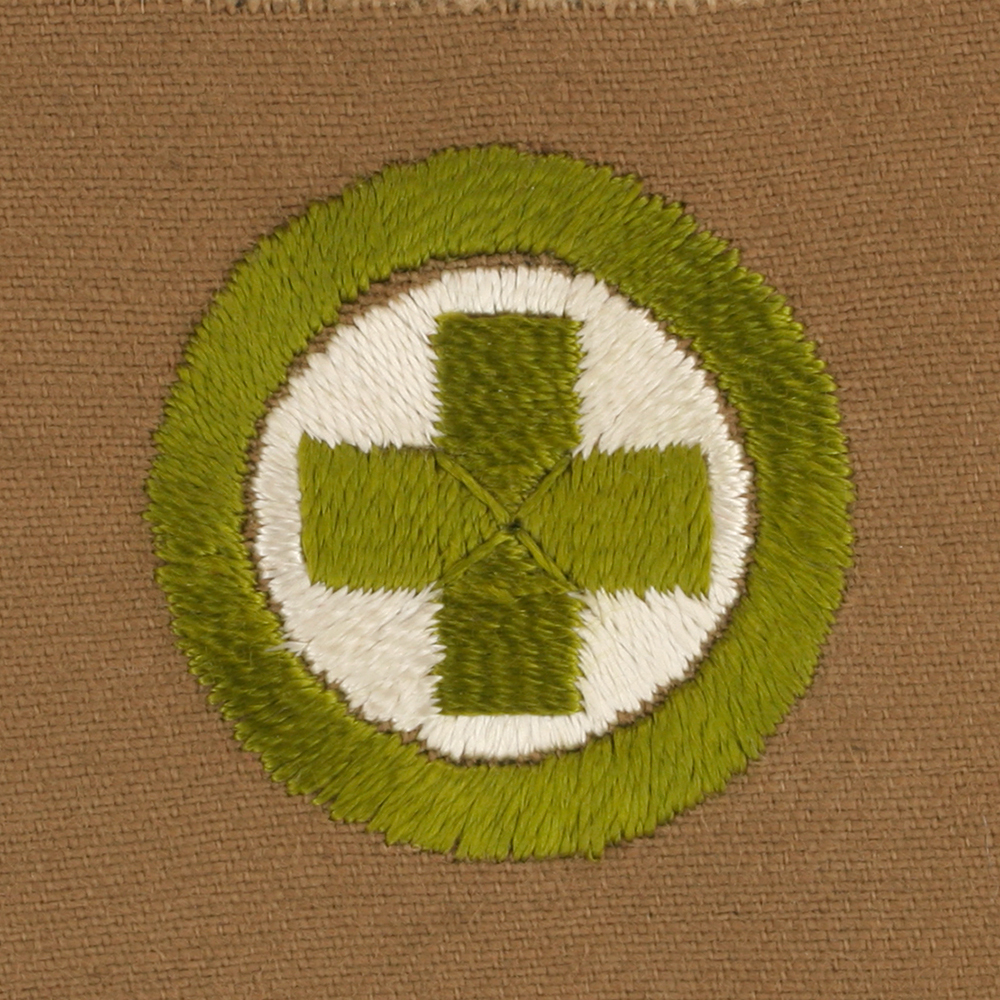
Fig. 4: SafFir-AT1-error3-front
- Manufacturing error: Type 3 error; twill back
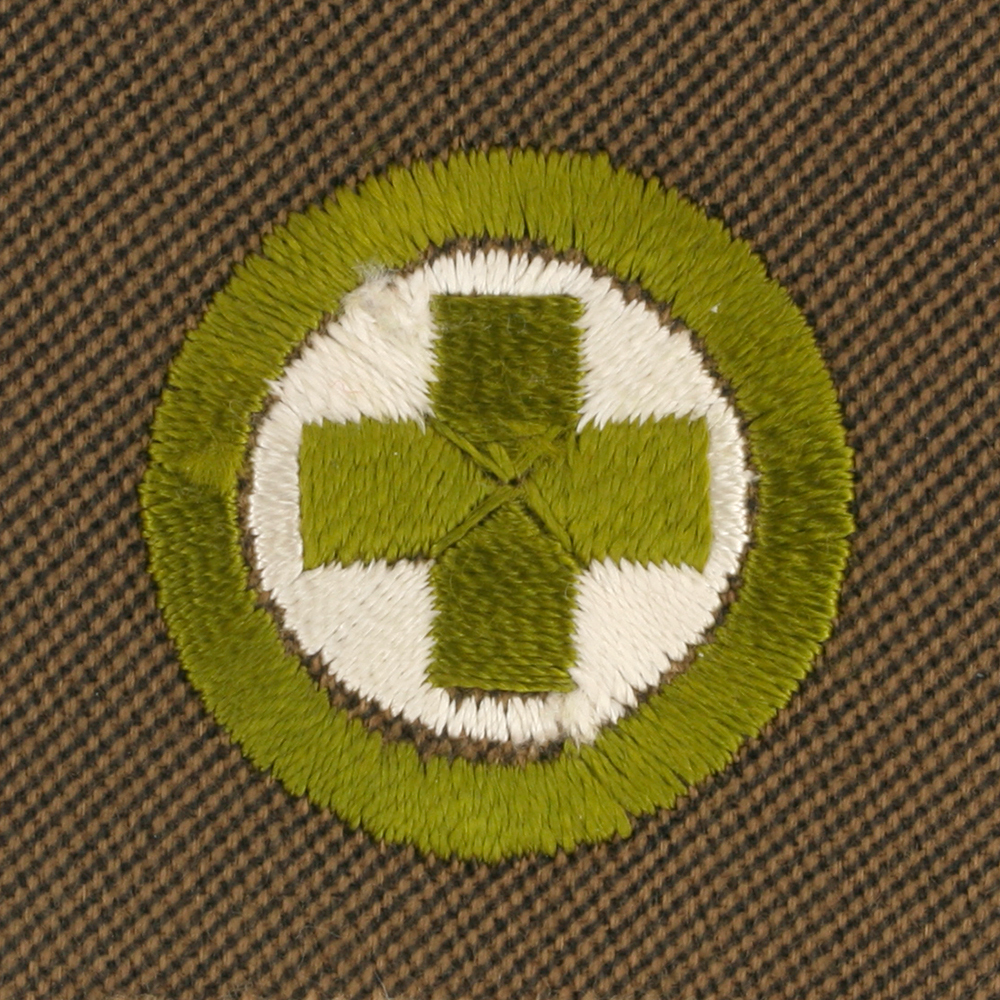
Fig. 5: SafFir-AT1-error3-reverse
- Back: Black imprint
Item Name: Safety First 1920 - 1927
Item ID: SafFir-AT1
Collector Rating: 1
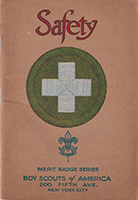
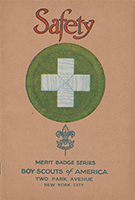
Pamphlets Used to Earn this Badge
Requirements March 1927 until November 1932
1. Make a safety inspection of his home, accompanied by one or both parents.
(a) List all possible causes of accidents, the report to be signed by one of his parents.
(b) State in writing what he has done to correct at least three dangerous conditions if found in his home.
2. Report in writing the number of accidental deaths in his city or county for the last calendar year and classify them according to principal causes. (Sources of information: Police Department, Health Department, Community Safety Council.) Explain how this information has been, or may be used to prevent such accidents, or improve such conditions through is troop, school, community and home.
3. Report in writing three or more dangerous conditions in the neighborhood in which he lives, describing each accurately and suggesting a practical remedy for each.
4. Report in writing three or more dangerous conditions or practices in the neighborhood of his school or his place of employment, stating what he has done personally to correct them.
5. Present satisfactory evidence from his school principal that he has actively shared in the safety work of the school over a period of at least ten weeks and has at all times done his best by his example and attitude to interest his schoolmates in safety activities. Or present satisfactory evidence that he has performed genuine and substantial safety services for a similar period of ten weeks.
6. Interview a representative of an electric or steam railroad to determine the chief causes of railroad accidents in the territory of the railroad, and report the interview in writing.
7. Make a canvass of the members of his class (or the members of his troop), getting an account of at least ten different kinds of accidents which have happened at play. (This means in summer or winter sports, camping, at play on the street, etc.)
(a) List these accidents, classifying them by cause.
(b) Suggest practical ways of preventing similar accidents.
8. Explain at least six of the principal state or local regulations for motorists and pedestrians in his community.
(a) Describe how he applies these principles daily while walking, roller-skating, riding a bicycle or in connection with other sports.
(b) State at least four practical ways in which he can help to prevent street accidents, particularly to old people, little children and those who are physically handicapped.
9. Pass a satisfactory examination on the history of the safety movement, and the extent of the accident problem today, showing a knowledge of the principal agencies, governmental and private, the primary work of which is to safeguard human life.