-
Merit Badges
- Legend to identify Merit Badges
- 1910 British Merit Badges
- Square 1911 - 33
- Wide Crimped 1934 & 35
-
Narrow Tan Crimped 1936 - 42
- Tan Heavyweight Cloth with Silk Embroidery and Printed Back 1936 - 37
- Tan Heavyweight Cloth with Silk Embroidery and Plain Back 1937 - 38
- Tan Lightweight Cloth with Silk Embroidery and Plain Back 1938 - 39
- Tan Lightweight Cloth with Cotton Continuous Loop Embroidery and Plain Back 1939 - 42
- Tan Lightweight Cloth with Cotton Lockstitch Embroidery and Plain Back 1939 - 42
- Blue Background 1942 - 46
- Wartime 1942 - 46
- Khaki Narrow Crimped 1946 - 59
- Green Twill Gauze Back 1960 - 68
- Fully Embroidered Merrowed Edge 1960 - 72
- Unprinted Plastic Back 1972 - 01
- Printed Plastic Back 2002 - Current
-
Merit Badge Paper
- Merit Badge Applications
- Merit Badge Cards
-
Merit Badge Pamphlets
- Type 1 White Cover - Rectangle Drawing On Cover
- Type 2 White Cover 5-375" x 8" Title at Top
- Type 3A Tan Cover - 200 Fifth Avenue
- Type 3B Tan Cover - 2 line address New York City
- Type 3C Tan Cover - 2 line address New York N.Y.
- Type 3D Tan Cover - 1 line address New York N.Y.
- Type 4 Standing Scout Cover
- Type 5A War Cover
- Type 5B Red and White
- Type 6 Photo-Red Cover
- Type 7 Full Photo Cover or Bulls-eye Cover
- Type 8 Full Photo - Green Stripe Cover
- Type 9 Full Photo - Red Stripe Cover
- Type 10A Blue Stripe - Logo above bottom blue stripe - FDL centered
- Type 10B - Blue Stripe in bottom of photo area. FDL to left of text
- Special Covers
- Boy Craft Helps
- Merit Badge Counselor's Guides
-
Youth Position
- Junior Assistant Scoutmaster
- Senior Patrol Leader
- Assistant Senior Patrol Leader
- Patrol Leader
- Assistant Patrol Leader
- Troop Guide
- Scribe
- Quartermaster
- Instructor
- Chaplain Aide
- Den Chief
- Librarian
- Musician
- Webmaster
- Bugler
- Troop Historian
- Troop Representative
- Unit Representative
- Leadership Corps
- Honor Guard
- Leave No Trace Trainer
- Outdoor Ethics Guide
-
Patrol Medallions
- Patrol Medallions Introduction
- Legend to identify Patrol Medallions
- Patrol Shoulder Knot-Ribbons
- Felt Handmade Patrol Medallions
- Square Felt Patrol Medallions
- Round Broadcloth Patrol Medallions
- Red Twill Patrol Medallions
- Multi-Color Cloth Patrol Medallions
- Tan Cloth Patrol Medallions
- Patrol Medallion Back Patches
- Woodbadge Patrol Medallion
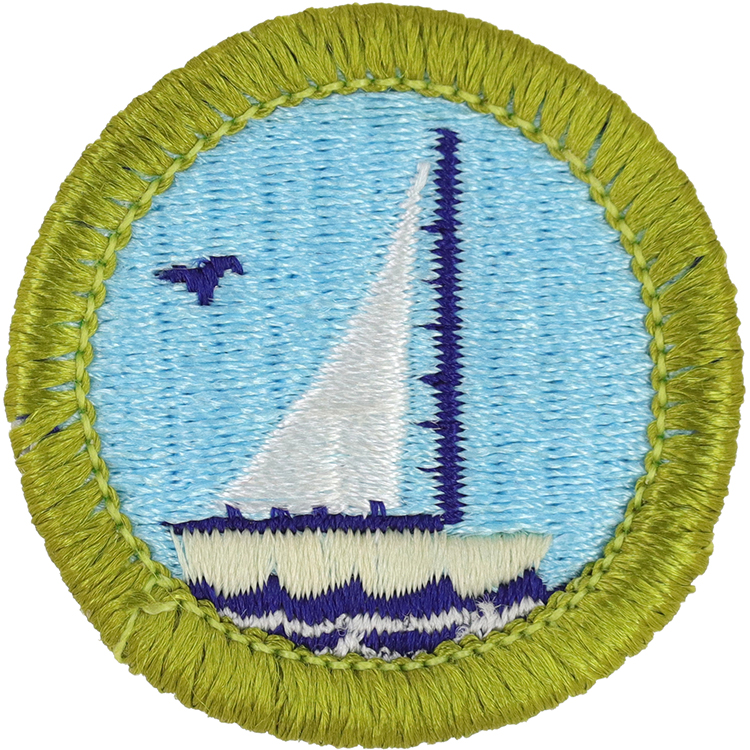
Fig. 1: SmaSai-H5-Front
- Embroidery: Rayon thread
- Border: Merrowed
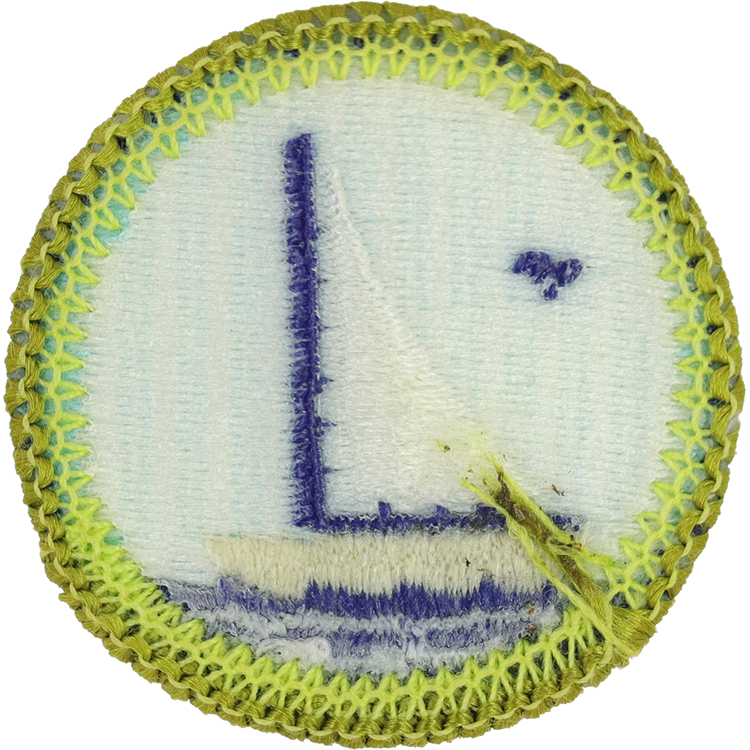
Fig. 2: SmaSai-H5-Reverse
- Back: Molded plastic
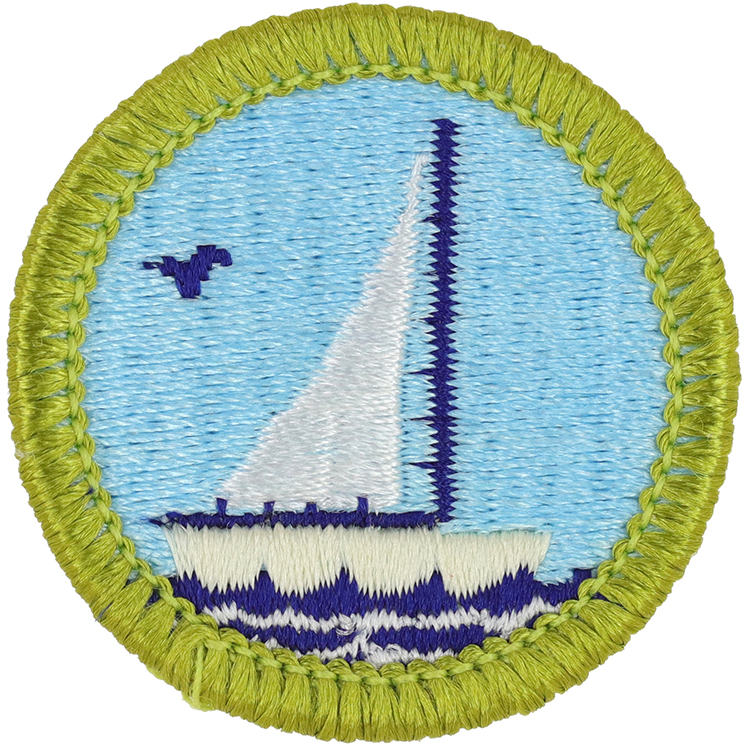
Fig. 3: SmaSai-H5-mve1-front
- Minor variation: Yellow border
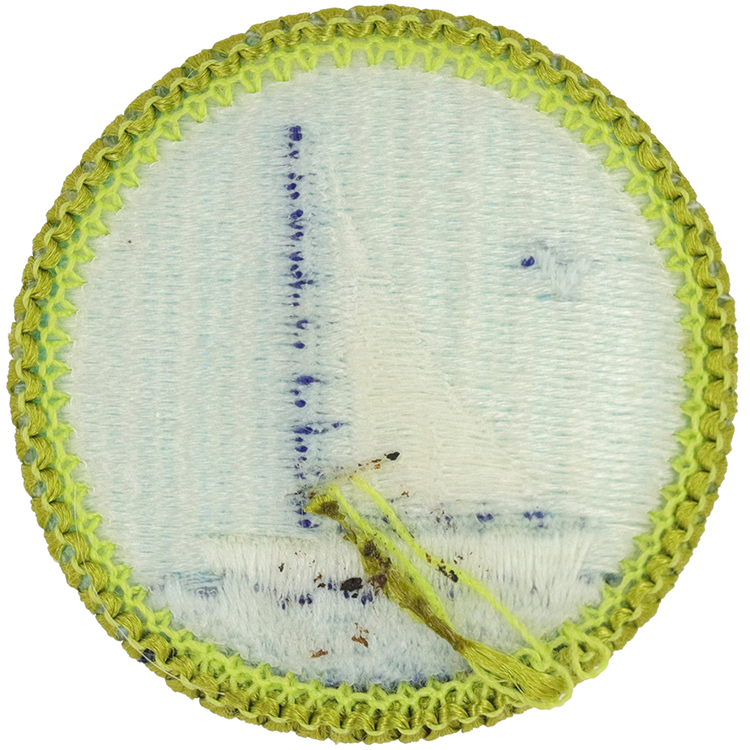
Fig. 4: SmaSai-H5-mve1-reverse
- Back: Molded plastic
Item Name: Small Boat Sailing 1990 - 2002
Item ID: SmaSai-H5
Collector Rating: 1
Pamphlets Used to Earn this Badge
Requirements August 1982 until September 1995
1. Before doing other requirements, successfully complete the BSA swimmer test. Jump feet first into water over your head in depth, swim 75 yards or 75 meters in a strong manner using one or more of the following strokes: side stroke, breast stroke, trudgen, or crawl; then swim 25 yards or 25 meters using an easy, resting backstroke. The 100 yards or 100 meters must be swum continuously and include at least one sharp turn. After completing the swim, rest by floating as motionless as possible.
2. Describe the boat you will be using for the sailing requirement, naming all of the major parts and the function of those parts.* Tell the difference between keel, centerboard, dagger board, bilgeboard, and leeboard. Explain the purpose of each.
3. Before going afloat do the following:
(a) Discuss the nine points of the BSA Safety Afloat plan.
(b) Discuss the rules of the road in general and specific rules or laws that apply to your area or state.
(c) Discuss with your counselor how the hazards of weather and heavy water conditions can affect both safety and performance in sailing.
(d) Prepare a typical float plan.
4. With the help of a buddy, show you can sail a boat properly by doing the following:
(a) Prepare the boat for sailing, include a safety inspection.
(b) Get under way from a dock, mooring, or beach.
(c) Properly set sails for a course that will include running, beating, and reaching_-the basic points of sailing.
(d) Change tack by coming about; by jibing.
(e) Anchor properly.
(f) Demonstrate the rescue of a man overboard and capsize procedures.+
(g) Demonstrate the procedure to use in the following: helping others, bad weather, running aground.
(h) Upon returning to your dock, mooring, or beach, properly secure all equipment, furl or stow sails, and prepare the craft for unattended docking, mooring, or beaching for overnight or longer.
5. Have a working knowledge of marlinspike seamanship and do the following:
(a) Show how to tie the square or reef knot, clove hitch, two half hitches, bowline, figure-eight knot, and mooring hitch. Demonstrate the use of each.
(b) Show how to heave a line, coil a line, fake down a line.
(c) Whip the ends of a line; tell why whippings are used.
(d) Discuss the kinds of lines used on sailboats and the types of fibers used in their manufacture. Tell the advantages and disadvantages of each.
6. Describe how you would care for and maintain a sailboat and its gear throughout the year.
7. With the counselor, review sailing terminology; include points of sailing. Discuss various types of sailboats in use today; tell their differences.
8. Give a short history of sailing in the United States, including its importance in the growth of our nation. Discuss commercial and recreational sailing, including racing and the America's Cup. This requirement may be completed in written or oral form.
* The skills may be demonstrated on any boat available to the Scout. While no specific sail plan is recommended, it is suggested that craft be under 20 feet. The boat must have the capability of sailing to windward.
+ Capsize procedures should be conducted under the close supervision of the counselor. A rescue boat should be standing by to assist, if necessary, and to tow the capsized craft to shore. Self-bailing boats are acceptable for this requirement. Extreme care should be taken to avoid personal injury and damage to the boat or its equipment.
Requirements September 1995 until January 1998
1. Show that you know first aid for injuries or illnesses that could occur while small-boat sailing, including hypothermia, heatstroke, heat exhaustion, dehydration, sunburn, insect stings, tick bites, blisters, and hyperventilation.
2. Do the following:
(a) Identify the conditions that must exist before performing CPR on a person. Explain how such conditions are recognized.
(b) Demonstrate proper technique for performing CPR on an adult mannequin for at least three minutes.
3. Before doing the following requirements, successfully complete the BSA swimmer test. Jump feet first into water over your head in depth, swim 75 yards or 75 meters in a strong manner using one or more of the following strokes: side stroke, breast stroke, trudgen, or crawl; then swim 25 yards or 25 meters using an easy, resting backstroke. The 100 yards or 100 meters must be swum continuously and include at least one sharp turn. After completing the swim, rest by floating as motionless as possible.
4. Describe the boat you will be using for the sailing requirement, naming all of the major parts and the function of those parts.* Tell the difference between keel, centerboard, dagger board, bilgeboard, and leeboard. Explain the purpose of each.
5. Before going afloat do the following:
(a) Discuss the nine points of the BSA Safety Afloat plan.
(b) Discuss the rules of the road in general and specific rules or laws that apply to your area or state.
(c) Discuss with your counselor how the hazards of weather and heavy water conditions can affect both safety and performance in sailing.
(d) Prepare a typical float plan.
6. With the help of a buddy, show you can sail a boat properly by doing the following:
(a) Prepare the boat for sailing, include a safety inspection.
(b) Get under way from a dock, mooring, or beach.
(c) Properly set sails for a course that will include running, beating, and reaching_-the basic points of sailing.
(d) Change tack by coming about; by jibing.
(e) Anchor properly.
(f) Demonstrate the rescue of a man overboard and capsize procedures.+
(g) Demonstrate the procedure to use in the following: helping others, bad weather, running aground.
(h) Upon returning to your dock, mooring, or beach, properly secure all equipment, furl or stow sails, and prepare the craft for unattended docking, mooring, or beaching for overnight or longer.
7. ave a working knowledge of marlinspike seamanship and do the following:
(a) Show how to tie the square or reef knot, clove hitch, two half hitches, bowline, figure-eight knot, and mooring hitch. Demonstrate the use of each.
(b) Show how to heave a line, coil a line, fake down a line.
(c) Whip the ends of a line; tell why whippings are used.
(d) Discuss the kinds of lines used on sailboats and the types of fibers used in their manufacture. Tell the advantages and disadvantages of each.
8. Describe how you would care for and maintain a sailboat and its gear throughout the year.
9. With the counselor, review sailing terminology; include points of sailing. Discuss various types of sailboats in use today; tell their differences.
10. Give a short history of sailing in the United States, including its importance in the growth of our nation. Discuss commercial and recreational sailing, including racing and the America's Cup. This requirement may be completed in written or oral form.
* The skills may be demonstrated on any boat available to the Scout. While no specific sail plan is recommended, it is suggested that craft be under 20 feet. The boat must have the capability of sailing to windward.
+ Capsize procedures should be conducted under the close supervision of the counselor. A rescue boat should be standing by to assist, if necessary, and to tow the capsized craft to shore. Self-bailing boats are acceptable for this requirement. Extreme care should be taken to avoid personal injury and damage to the boat or its equipment.
Requirements January 1998 April 1999
1. Show that you know first aid for injuries or illnesses that could occur while small-boat sailing, including hypothermia, heatstroke, heat exhaustion, dehydration, sunburn, insect stings, tick bites, blisters, and hyperventilation.
2. Do the following:
(a) Identify the conditions that must exist before performing CPR on a person. Explain how such conditions are recognized.
(b) Demonstrate proper technique for performing CPR on an adult mannequin for at least three minutes.
3. Before doing the following requirements, successfully complete the BSA swimmer test. Jump feet first into water over your head in depth, swim 75 yards or 75 meters in a strong manner using one or more of the following strokes: side stroke, breast stroke, trudgen, or crawl; then swim 25 yards or 25 meters using an easy, resting backstroke. The 100 yards or 100 meters must be swum continuously and include at least one sharp turn. After completing the swim, rest by floating as motionless as possible.
4. Describe the boat you will be using for the sailing requirement, naming all of the major parts and the function of those parts.* Tell the difference between keel, centerboard, dagger board, bilgeboard, and leeboard. Explain the purpose of each.
5. Before going afloat do the following:
(a) Discuss the nine points of the BSA Safety Afloat plan.
(b) Discuss the rules of the road in general and specific rules or laws that apply to your area or state.
(c) Discuss with your counselor how the hazards of weather and heavy water conditions can affect both safety and performance in sailing.
d) Prepare a typical float plan.
6. With the help of a buddy, show you can sail a boat properly by doing the following:
(a) Prepare the boat for sailing, include a safety inspection.
(b) Get under way from a dock, mooring, or beach.
(c) Properly set sails for a course that will include running, beating, and reaching_-the basic points of sailing.
(d) Change tack by coming about; by jibing.
(e) Anchor properly.
(f) Demonstrate the rescue of a man overboard and capsize procedures.+
(g) Demonstrate the procedure to use in the following: helping others, bad weather, running aground.
(h) Upon returning to your dock, mooring, or beach, properly secure all equipment, furl or stow sails, and prepare the craft for unattended docking, mooring, or beaching for overnight or longer.
7. Have a working knowledge of marlinspike seamanship and do the following:
(a) Show how to tie the square or reef knot, clove hitch, two half hitches, bowline, figure-eight knot, and mooring hitch. Demonstrate the use of each.
(b) Show how to heave a line, coil a line, fake down a line.
(c) Whip the ends of a line; tell why whippings are used.
(d) Discuss the kinds of lines used on sailboats and the types of fibers used in their manufacture. Tell the advantages and disadvantages of each.
8. Describe how you would care for and maintain a sailboat and its gear throughout the year.
9. With the counselor, review sailing terminology; include points of sailing. Discuss various types of sailboats in use today; tell their differences.
10. Give a short history of sailing in the United States, including its importance in the growth of our nation. Discuss commercial and recreational sailing, including racing and the America's Cup. This requirement may be completed in written or oral form
* The skills may be demonstrated on any boat available to the Scout. While no specific sail plan is recommended, it is suggested that craft be under 20 feet. The boat must have the capability of sailing to windward.
+ Capsize procedures should be conducted under the close supervision of the counselor. A rescue boat should be standing by to assist, if necessary, and to tow the capsized craft to shore. Self-bailing boats are acceptable for this requirement. Extreme care should be taken to avoid personal injury and damage to the boat or its equipment.
Requirements April 1999 until January 2005
1. Show that you know first aid for injuries or illnesses that could occur while small-boat sailing, including hypothermia, heatstroke, heat exhaustion, dehydration, sunburn, insect stings, tick bites, blisters, and hyperventilation.
2. Do the following:
(a) Identify the conditions that must exist before performing CPR on a person. Explain how such conditions are recognized.
(b) Demonstrate proper technique for performing CPR using a training device approved by your counselor.
3. Before doing the following requirements, successfully complete the BSA swimmer test. Jump feet first into water over your head in depth, swim 75 yards or 75 meters in a strong manner using one or more of the following strokes: side stroke, breast stroke, trudgen, or crawl; then swim 25 yards or 25 meters using an easy, resting backstroke. The 100 yards or 100 meters must be swum continuously and include at least one sharp turn. After completing the swim, rest by floating as motionless as possible.
4. Describe the boat you will be using for the sailing requirement, naming all of the major parts and the function of those parts.* Tell the difference between keel, centerboard, dagger board, bilgeboard, and leeboard. Explain the purpose of each.
5. Before going afloat do the following:
(a) Discuss the nine points of the BSA Safety Afloat plan.
(b) Discuss the rules of the road in general and specific rules or laws that apply to your area or state.
(c) Discuss with your counselor how the hazards of weather and heavy water conditions can affect both safety and performance in sailing.
(d) Prepare a typical float plan.
6. With the help of a buddy, show you can sail a boat properly by doing the following:
(a) Prepare the boat for sailing, include a safety inspection.
(b) Get under way from a dock, mooring, or beach.
(c) Properly set sails for a course that will include running, beating, and reaching_-the basic points of sailing.
(d) Change tack by coming about; by jibing.
(e) Anchor properly.
(f) Demonstrate the rescue of a man overboard and capsize procedures.+
(g) Demonstrate the procedure to use in the following: helping others, bad weather, running aground.
(h) Upon returning to your dock, mooring, or beach, properly secure all equipment, furl or stow sails, and prepare the craft for unattended docking, mooring, or beaching for overnight or longer.
7. Have a working knowledge of marlinspike seamanship and do the following:
(a) Show how to tie the square or reef knot, clove hitch, two half hitches, bowline, figure-eight knot, and mooring hitch. Demonstrate the use of each.
(b) Show how to heave a line, coil a line, fake down a line.
(c) Whip the ends of a line; tell why whippings are used.
(d) Discuss the kinds of lines used on sailboats and the types of fibers used in their manufacture. Tell the advantages and disadvantages of each.
8. Describe how you would care for and maintain a sailboat and its gear throughout the year.
9. With the counselor, review sailing terminology; include points of sailing. Discuss various types of sailboats in use today; tell their differences.
10. Give a short history of sailing in the United States, including its importance in the growth of our nation. Discuss commercial and recreational sailing, including racing and the America's Cup. This requirement may be completed in written or oral form.