-
Merit Badges
- Legend to identify Merit Badges
- 1910 British Merit Badges
- Square 1911 - 33
- Wide Crimped 1934 & 35
-
Narrow Tan Crimped 1936 - 42
- Tan Heavyweight Cloth with Silk Embroidery and Printed Back 1936 - 37
- Tan Heavyweight Cloth with Silk Embroidery and Plain Back 1937 - 38
- Tan Lightweight Cloth with Silk Embroidery and Plain Back 1938 - 39
- Tan Lightweight Cloth with Cotton Continuous Loop Embroidery and Plain Back 1939 - 42
- Tan Lightweight Cloth with Cotton Lockstitch Embroidery and Plain Back 1939 - 42
- Blue Background 1942 - 46
- Wartime 1942 - 46
- Khaki Narrow Crimped 1946 - 59
- Green Twill Gauze Back 1960 - 68
- Fully Embroidered Merrowed Edge 1960 - 72
- Unprinted Plastic Back 1972 - 01
- Printed Plastic Back 2002 - Current
-
Merit Badge Paper
- Merit Badge Applications
- Merit Badge Cards
-
Merit Badge Pamphlets
- Type 1 White Cover - Rectangle Drawing On Cover
- Type 2 White Cover 5-375" x 8" Title at Top
- Type 3A Tan Cover - 200 Fifth Avenue
- Type 3B Tan Cover - 2 line address New York City
- Type 3C Tan Cover - 2 line address New York N.Y.
- Type 3D Tan Cover - 1 line address New York N.Y.
- Type 4 Standing Scout Cover
- Type 5A War Cover
- Type 5B Red and White
- Type 6 Photo-Red Cover
- Type 7 Full Photo Cover or Bulls-eye Cover
- Type 8 Full Photo - Green Stripe Cover
- Type 9 Full Photo - Red Stripe Cover
- Type 10A Blue Stripe - Logo above bottom blue stripe - FDL centered
- Type 10B - Blue Stripe in bottom of photo area. FDL to left of text
- Special Covers
- Boy Craft Helps
- Merit Badge Counselor's Guides
-
Youth Position
- Junior Assistant Scoutmaster
- Senior Patrol Leader
- Assistant Senior Patrol Leader
- Patrol Leader
- Assistant Patrol Leader
- Troop Guide
- Scribe
- Quartermaster
- Instructor
- Chaplain Aide
- Den Chief
- Librarian
- Musician
- Webmaster
- Bugler
- Troop Historian
- Troop Representative
- Unit Representative
- Leadership Corps
- Honor Guard
- Leave No Trace Trainer
- Outdoor Ethics Guide
-
Patrol Medallions
- Patrol Medallions Introduction
- Legend to identify Patrol Medallions
- Patrol Shoulder Knot-Ribbons
- Felt Handmade Patrol Medallions
- Square Felt Patrol Medallions
- Round Broadcloth Patrol Medallions
- Red Twill Patrol Medallions
- Multi-Color Cloth Patrol Medallions
- Tan Cloth Patrol Medallions
- Patrol Medallion Back Patches
- Woodbadge Patrol Medallion
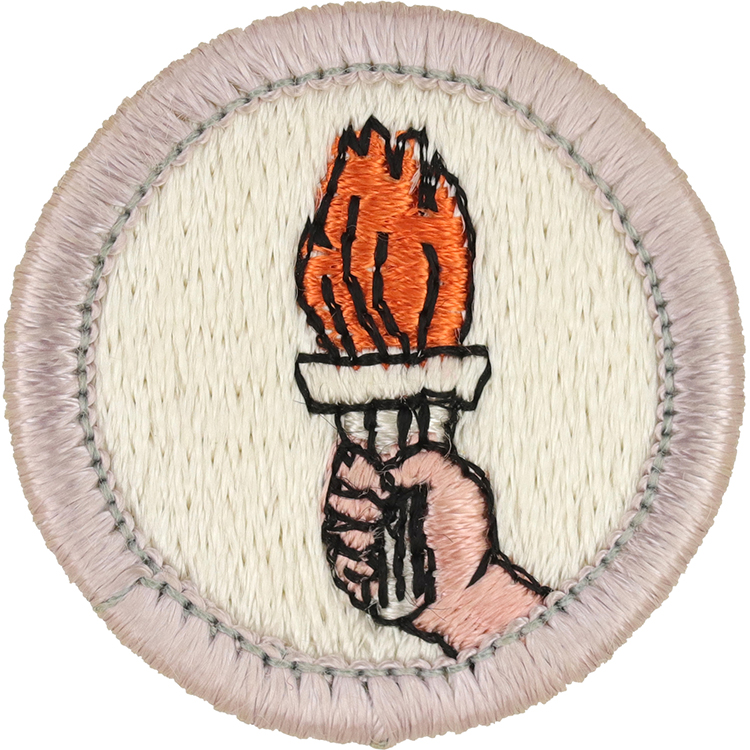
Fig. 1: Sports-H3-Front
- Embroidery: Cotton thread, dull sheen
- Border: Dk green merrowed
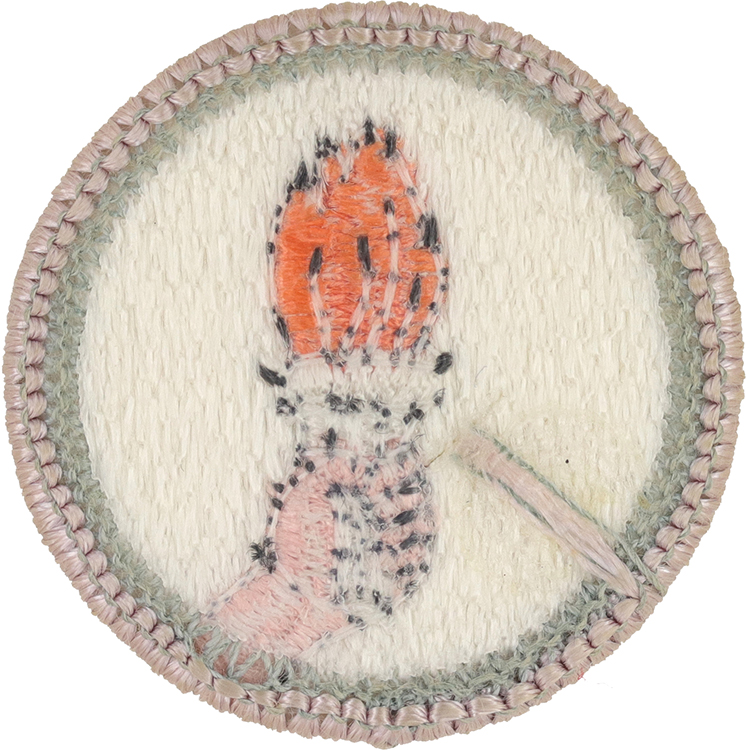
Fig. 2: Sports-H3-Reverse
- Embroidery: Cotton thread, dull sheen
- Border: Silver merrowed
Item Name: Sports 1976 - 1978
Item ID: Sports-H3
Collector Rating: 1
Pamphlets Used to Earn this Badge
Requirements January 1975 until July 1976
1. Explain sportsmanship. Tell why it is important. Give several examples of good sportsmanship in sports. Relate at least one of these to everyday citizenship off the sports field.
2. Take part for one full season as a member of an organized team in ONE of the following team sports:
Baseball
Basketball
Cross country
Field Hockey
Football
Hockey
Lacrosse
Rugby
Soccer
Softball
Swimming
Team Handball
Tennis
Volleyball
Water polo
Wrestling
(Or any other recognized team sport approved in advance by your counselor)
3. Do the following:
(a) Take part in ONE of the following individual sports on a competitive basis in at least two organized meets or tournaments:
Badminton
Bait or Fly Casting
Bowling
Diving
Fencing
Golf
Gymnastics
Handball
Horseshoes
Judo
Paddle Ball
Swimming
Table Tennis
Tennis
Track and Field
Wrestling
(Or any other recognized individual sport approved in advance by your counselor except boxing and karate)
(b) OR earn ONE of the following merit badges:
Archery
Athletics
Canoeing
Cycling
Fishing
Hiking
Horsemanship
Motorboating
Orienteering
Rifle and shotgun shooting
Rowing
Skating
Skiing
Small-boat sailing
Swimming
Water Skiing
4. Make a set of training rules for the sports you picked. Tell why these rules are important. Follow these rules. Design exercises for these sports. Keep a record of how you do in these sports for one season. Show how you have improved.
5. Show proper techniques in your two picked sports.
6. Explain the attributes of a good team leader and a good team player.
7. Draw diagrams of the playing areas for your two sports.
8. Explain the rules and etiquette for your two sports. List the equipment needed. Describe the protective equipment. Tell why it is needed. Tell what it does.
Requirements July 1976 until February 1979
1. Explain sportsmanship. Tell why it is important. Give several examples of good sportsmanship in sports. Relate at least one of these to everyday citizenship off the sports field.
2. Take part for one full season as a member of an organized team in ONE of the following team sports:
Baseball
Basketball
Bowling
Cross country
Diving
Fencing
Field Hockey
Football
Golf
Gymnastics
Ice hockey
Lacrosse
Rugby
Skating (ice or roller)
Soccer
Softball
Swimming
Team Handball
Tennis
Track and field
Volleyball
Water polo
Wrestling
(Or any other recognized team sport approved in advance by your counselor, except boxing and karate)
3. * Take part in ONE of the following individual sports on a competitive basis in at least two organized meets or tournaments:
Badminton
Bait or Fly Casting
Bowling
Canoeing
Cycling
Diving
Fencing
Fishing
Golf
Gymnastics
Handball
Horsemanship
Horseshoes
Judo
Orienteering
Paddle Ball
Rifle or shotgun shooting
Sailing
Skating (ice or roller)
Skiing
Swimming
Table Tennis
Tennis
Track and Field
Waterskiing
Wrestling
(Or any other recognized individual sport approved in advance by your counselor except boxing and karate)
4. Make a set of training rules for the sports you picked. Tell why these rules are important. Follow these rules. Design exercises for these sports. Keep a record of how you do in these sports for one season. Show how you have improved.
5. Show proper techniques in your two picked sports.
6. Explain the attributes of a good team leader and a good team player.
7. Draw diagrams of the playing areas for your two sports.
8. Explain the rules and etiquette for your two sports. List the equipment needed. Describe the protective equipment. Tell why it is needed. Tell what it does.
*This cannot be the same sport used to meet No.2