-
Merit Badges
- Legend to identify Merit Badges
- 1910 British Merit Badges
- Square 1911 - 33
- Wide Crimped 1934 & 35
-
Narrow Tan Crimped 1936 - 42
- Tan Heavyweight Cloth with Silk Embroidery and Printed Back 1936 - 37
- Tan Heavyweight Cloth with Silk Embroidery and Plain Back 1937 - 38
- Tan Lightweight Cloth with Silk Embroidery and Plain Back 1938 - 39
- Tan Lightweight Cloth with Cotton Continuous Loop Embroidery and Plain Back 1939 - 42
- Tan Lightweight Cloth with Cotton Lockstitch Embroidery and Plain Back 1939 - 42
- Blue Background 1942 - 46
- Wartime 1942 - 46
- Khaki Narrow Crimped 1946 - 59
- Green Twill Gauze Back 1960 - 68
- Fully Embroidered Merrowed Edge 1960 - 72
- Unprinted Plastic Back 1972 - 01
- Printed Plastic Back 2002 - Current
-
Merit Badge Paper
- Merit Badge Applications
- Merit Badge Cards
-
Merit Badge Pamphlets
- Type 1 White Cover - Rectangle Drawing On Cover
- Type 2 White Cover 5-375" x 8" Title at Top
- Type 3A Tan Cover - 200 Fifth Avenue
- Type 3B Tan Cover - 2 line address New York City
- Type 3C Tan Cover - 2 line address New York N.Y.
- Type 3D Tan Cover - 1 line address New York N.Y.
- Type 4 Standing Scout Cover
- Type 5A War Cover
- Type 5B Red and White
- Type 6 Photo-Red Cover
- Type 7 Full Photo Cover or Bulls-eye Cover
- Type 8 Full Photo - Green Stripe Cover
- Type 9 Full Photo - Red Stripe Cover
- Type 10A Blue Stripe - Logo above bottom blue stripe - FDL centered
- Type 10B - Blue Stripe in bottom of photo area. FDL to left of text
- Special Covers
- Boy Craft Helps
- Merit Badge Counselor's Guides
-
Youth Position
- Junior Assistant Scoutmaster
- Senior Patrol Leader
- Assistant Senior Patrol Leader
- Patrol Leader
- Assistant Patrol Leader
- Troop Guide
- Scribe
- Quartermaster
- Instructor
- Chaplain Aide
- Den Chief
- Librarian
- Musician
- Webmaster
- Bugler
- Troop Historian
- Troop Representative
- Unit Representative
- Leadership Corps
- Honor Guard
- Leave No Trace Trainer
- Outdoor Ethics Guide
-
Patrol Medallions
- Patrol Medallions Introduction
- Legend to identify Patrol Medallions
- Patrol Shoulder Knot-Ribbons
- Felt Handmade Patrol Medallions
- Square Felt Patrol Medallions
- Round Broadcloth Patrol Medallions
- Red Twill Patrol Medallions
- Multi-Color Cloth Patrol Medallions
- Tan Cloth Patrol Medallions
- Patrol Medallion Back Patches
- Woodbadge Patrol Medallion
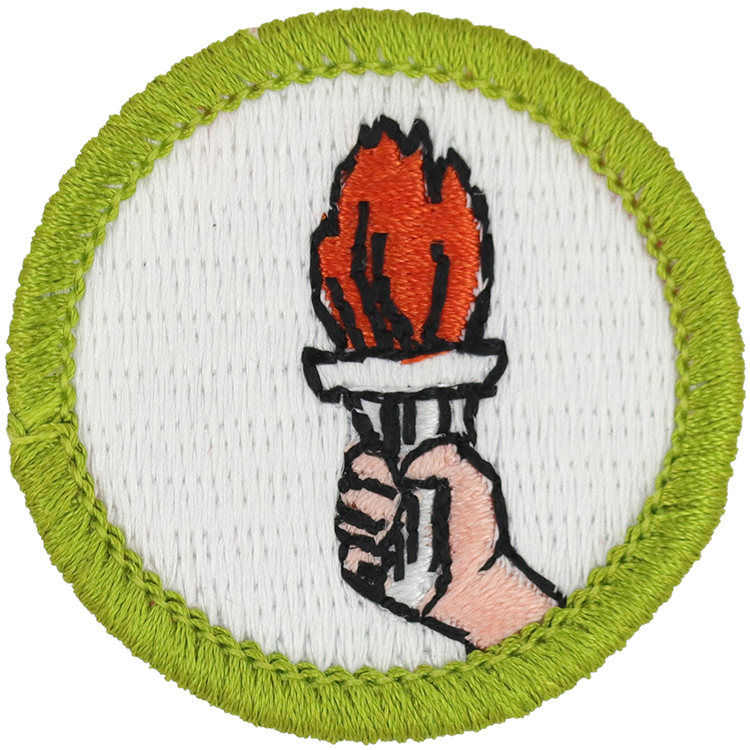
Fig. 1: Sports-J1-Front
- Embroidery: Rayon thread
- Border: Merrowed
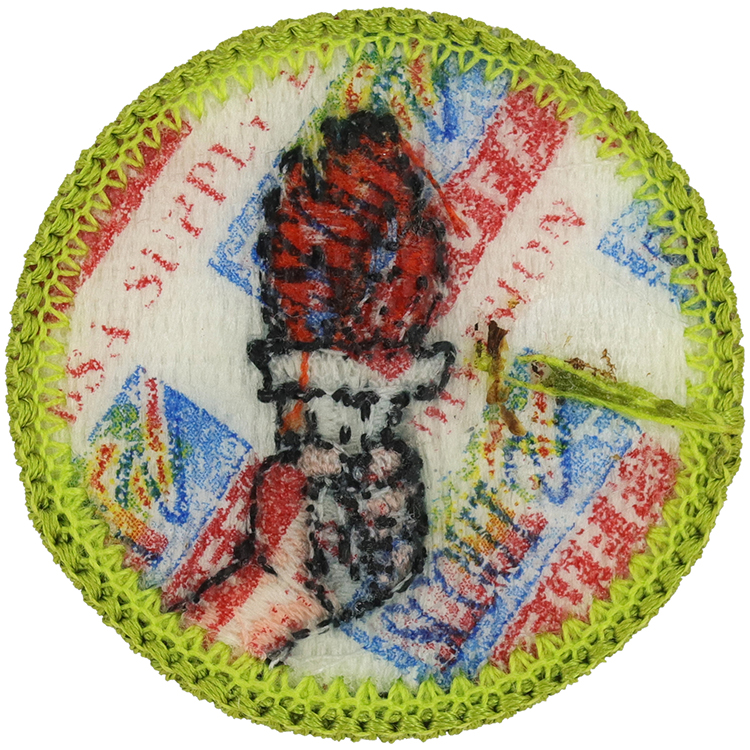
Fig. 2: Sports-J1-Reverse
- Back: Scout Stuff imprint
Item Name: Sports 2002 - 2009
Item ID: Sports-J1
Collector Rating: 1
Pamphlets Used to Earn this Badge
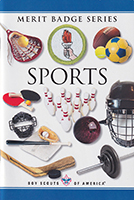
Requirements September 1995 until January 2007
1. Show that you know first aid for injuries or illness that could occur while playing sports including hypothermia; heatstroke; heat exhaustion; frostbite; dehydration; sunburn; blisters; hyperventilation; bruises; strains; sprains; muscle cramps; broken, chipped, loosened, or knocked-out teeth; bone fracture; nausea; and suspected injuries to the back, neck and head.
2. Explain sportsmanship. Tell why it is important. Give several examples of good sportsmanship in sports. Relate at least one of these to everyday citizenship off the sports field.
3. Take part for one full season as a member of an organized team in ONE of the following sports: baseball, basketball, bowling, cross country, diving, fencing, field hockey, football, golf, gymnastics, ice hockey, lacrosse, rugby, skating (ice or roller), soccer, softball, swimming, team handball, tennis, track and field, volleyball, water polo, and wrestling. (Or any other recognized team sport approved in advance by your counselor, except boxing and karate.)
4. Take part in ONE of the following sports on a competitive basis in two organized meets or tournaments: archery, badminton, bait or fly casting, bowling, canoeing, cycling, diving, fencing, fishing, golf, gymnastics, handball, horsemanship, horseshoes, judo, orienteering, paddleball, rifle or shotgun shooting, sailing, skating (ice or roller), skiing, swimming, table tennis, tennis, track and field, waterskiing, and wrestling. (Or any other recognized sport approved in advance by your counselor, except boxing and karate.)*
5. Make a set of training rules for the sports you picked. Tell why these rules are important. Follow these rules. Design exercises for these sports. Keep a record of how you do in these sports for one season. Show how you have improved.
6. Show proper techniques in your two picked sports.
7. Explain the attributes of a good team leader and a good team player.
8. Draw diagrams of the playing areas for your two sports.
9. Explain the rules and etiquette for your two sports. List the equipment needed. Describe the protective equipment. Tell why it is needed. Tell what it does.
* This cannot be the same sport used to meet No. 3.
Requirements January 2007 until January 2011
Note: The activities used to fulfill the requirements for the Sports merit badge may not be used to help fulfill requirements for other merit badges.
1. Show that you know first aid for and how to prevent injuries or illnesses that could occur while playing sports, including sprains, strains, contusions, abrasions, fractures, blisters, muscle cramps, dehydration, heat and cold reactions, injured teeth, nausea, and suspected injuries to the head, neck, and back.
2. Explain the importance of the following:
(a) The physical exam
(b) Maintaining good health habits, especially during training
(c) Maintaining a healthy diet
3. Discuss the following:
(a) The importance of warming up and cooling down
(b) The importance of weight training
(c) The attributes (qualities) of a good sport, the importance of sportsmanship, and the traits of a good team leader and player who exhibits Scout spirit on and off the playing field
4. Take part for one season (or four months) as a competitive individual or as a member of an organized team in two of the following sports: baseball, basketball, bowling, cross country, field hockey, football, ice hockey, lacrosse, soccer, softball, table tennis, tennis, volleyball, water polo. Your counselor may approve in advance other recognized sports, but not any sport that is restricted and not authorized by the Boy the Scouts of America. Been with your chosen sports do the following:
(a) Give the rules and etiquette for the two sports you picked.
(b) List the equipment needed the two sports you chose. Describe the protective equipment and appropriate clothing (if any) and explain why it is needed.
(c) Draw diagrams of the playing area for your two sports.
5. With guidance from your counselor, establish a personal training program suited to the activities you chose in requirement 4. Then do the following:
(a) Organize a chart to track your training, practice, and development in these sports for one season (or four months).
(b) Demonstrate proper technique for you to chosen sports.
(c) At the end the season, share your completed chart with your counselor and discuss how your participation in the sports you chose has affected you mentally and physically